
REVIEW · BATTLESHIP MISSOURI & BOWFIN SUBMARINE
Battleships of WWII at Pearl Harbor from Waikiki
Pearl Harbor demands your attention. From Waikiki, this guided day pairs WWII ship memorials with royal and local history, so you get context along the way, not just a quick photo stop.
I especially like the guaranteed entry plus the calm, guided flow through the always-in-demand Pearl Harbor sites. I also like that your guide adds meaning to what you’re seeing, from the lead-up to Dec. 7, 1941 to what the USS Arizona and USS Missouri represent today.
One thing to consider: this is a long day with walking, and you’re dealing with Pearl Harbor bag rules, so pack smart and wear shoes you can rely on.
In This Review
- Key highlights worth planning for
- How this WWII day trip fits a Waikiki schedule
- Pearl Harbor Visitor Center: orientation first, then the harbor ride
- USS Arizona Memorial: quiet space, visible wreckage, and names you can’t miss
- Battleship Missouri: the deck tour tied to surrender and a few hard reminders
- USS Oklahoma Memorial: Ford Island’s land-based reminder
- Downtown Honolulu: a quick shift to Hawaii’s real-day rhythm
- Punchbowl (National Memorial Cemetery of the Pacific): views from an extinct volcano
- Iolani Palace: Hawaii’s monarchy stories, inside an iconic building
- Kawaiahaʻo Church: old worship, called Westminster Abbey of the Pacific
- Price and what you’re actually getting for $116.99
- Logistics that make or break the day: bags, shoes, silence, weather
- Who this tour is best for (and who should think twice)
- Should you book this Battleships of WWII tour from Waikiki?
- FAQ
- What time does this tour start?
- Does pickup and drop-off include Waikiki?
- Are tickets included for the Pearl Harbor and memorial stops?
- What are the rules for bags at Pearl Harbor?
- Is lunch included?
- What happens if weather is bad?
Key highlights worth planning for
- Guaranteed admission to the Pearl Harbor sites that are often hard to get into on your own
- A U.S. Navy-operated boat ride to the USS Arizona Memorial after the Visitor Center orientation
- Time on the actual decks and memorials: USS Arizona, USS Missouri, USS Oklahoma
- A full Honolulu mix after the ships: Downtown, Punchbowl, Iolani Palace, and more church/royal storytelling
- Pickup and drop-off in Waikiki in an air-conditioned vehicle, with tickets handled for you
- A small group size (max 24) for a more manageable experience
How this WWII day trip fits a Waikiki schedule
This tour is built for one big goal: making Pearl Harbor feel doable when you’re starting in Waikiki. You begin with a 7:00 am start, plus pickup in the Waikiki area (and specific airport pickup points if you arrive by Southwest or Hawaiian Airlines). That matters because Pearl Harbor is time-sensitive, and the morning pace keeps your day from turning into a stressed scramble.
The day runs about 7 to 9 hours, which is a lot, but it’s also a fair trade. You’re not just seeing one memorial. You’re moving through a sequence of places that show different angles of the same attack, then switching gears to Honolulu’s civic and royal landmarks.
What you’re really paying for is not just the sights. It’s the “friction removal”: admission handling, guided narration, and transportation. If you’ve ever tried to line up Pearl Harbor tickets yourself, you already know the hassle can swallow half the day.
Pearl Harbor Visitor Center: orientation first, then the harbor ride
The morning begins at the Pearl Harbor Historic Sites Visitor Center, where you get grounding before you step onto memorial grounds. You can walk through exhibits that cover events leading up to the attack on December 7, 1941, then watch a 23-minute documentary that puts the USS Arizona Memorial into the full story.
This stop is scheduled for about 2 hours, and it’s the part I consider most useful for first-time visitors. Without this context, the memorials can feel like separate landmarks. With it, you start seeing patterns: what was targeted, why certain ships mattered, and how the meaning of the site has been shaped since the war.
After the film and orientation exhibits, you board a U.S. Navy-operated boat for a short ride across the harbor. It’s about 10 minutes, and the ride is described as calm with views of surrounding military installations. Even if you know the headline story already, that crossing is a reset moment—your eyes adjust to the setting, and the day stops feeling like a checklist.
Practical note: museum time isn’t part of this tour. If you want the museums too, the provided guidance is to choose a “Complete Pearl Harbor Experience” instead. This one keeps you moving through memorials and key ship sites.
More ways to plan the Pearl Harbor morning
USS Arizona Memorial: quiet space, visible wreckage, and names you can’t miss
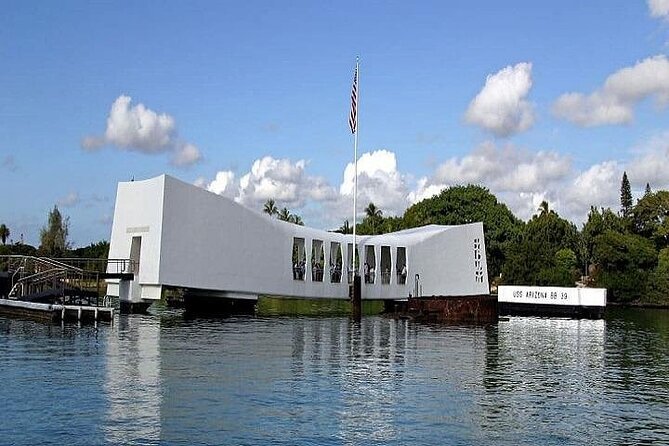
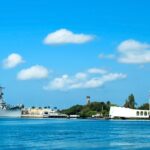
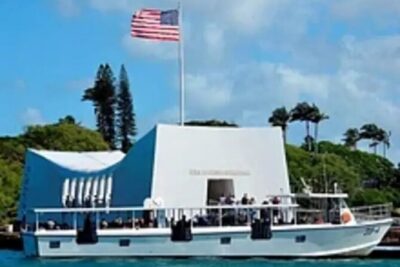
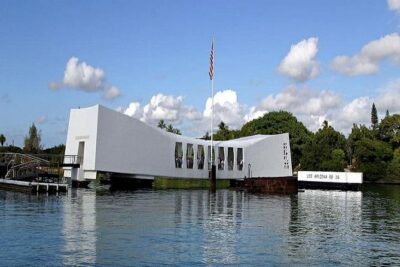
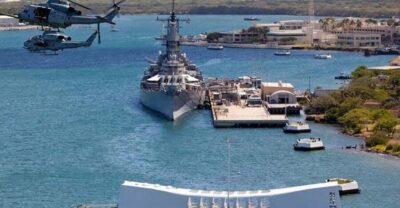
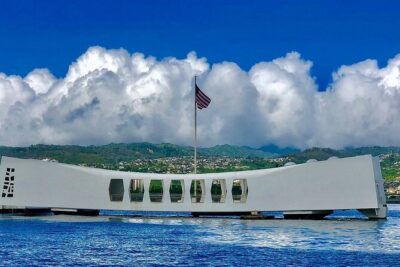
Your USS Arizona time is designed for reflection. The memorial itself is a white, open-air structure spanning the remains of the sunken battleship. Expect a solemn tone and a “slow down” feel, which the tour guidance encourages with respectful silence while you’re there.
You’ll also have a chance to see the wreckage from inside the memorial. You look down into the water, where parts of the ship are visible just below the surface. Oil droplets rise over time and are commonly referred to as the Tears of the Arizona—a small detail, but emotionally strong because it connects the site to the ongoing presence of what happened.
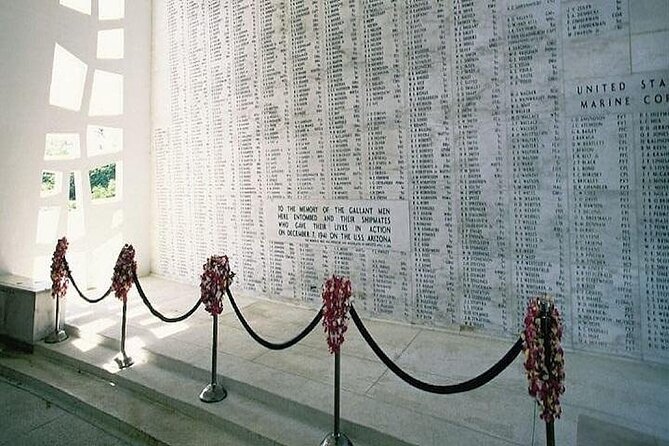
At the far end is the Remembrance Wall, inscribed with the names of the 1,177 crew members who lost their lives aboard USS Arizona. It’s not an abstract monument. It’s a list of people, which is why this stop hits hard for so many visitors.
The time here is about 1 hour with admission included. That’s enough to watch the space, look for details, and absorb what you’re seeing without feeling rushed out the door.
Battleship Missouri: the deck tour tied to surrender and a few hard reminders
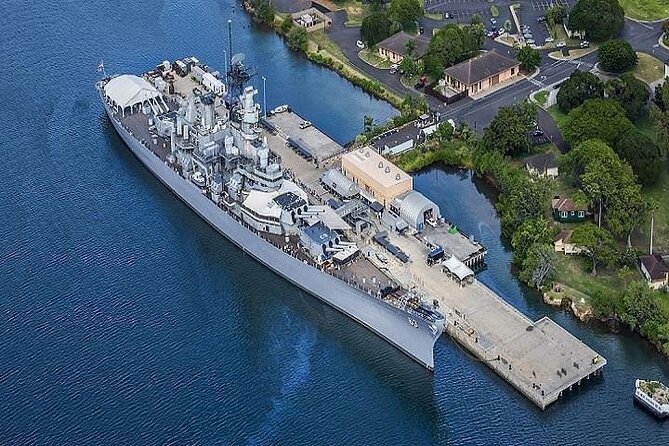
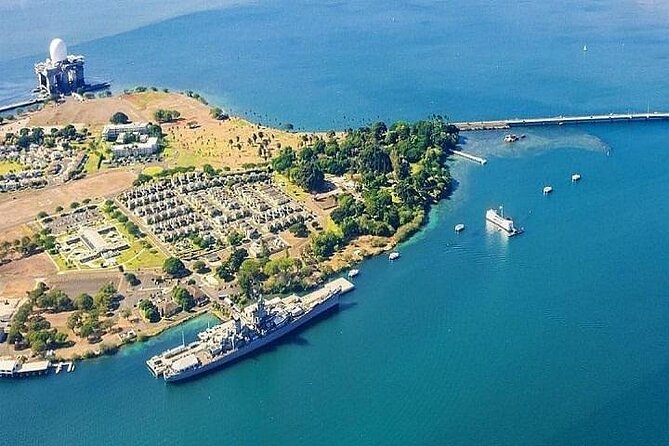
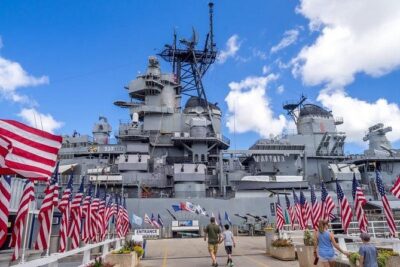
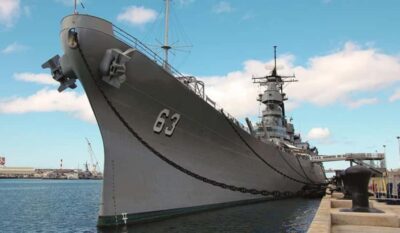
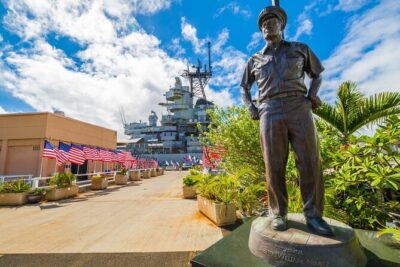
Next comes the Battleship Missouri Memorial, scheduled for about 2 hours. This one is more “ship” than “memorial,” in the sense that you walk the deck and see the scale of a battleship up close.
You’ll be on the last battleship the U.S. ever built, and you’re guided through spaces connected to major figures from 1945, including General MacArthur and Admiral Chester Nimitz. The tour also includes the significance of the day the Instrument of Surrender was signed, ending WWII, right on the Missouri’s deck.
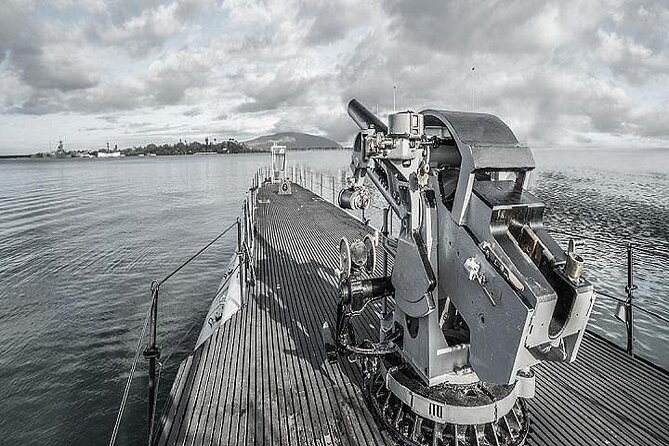
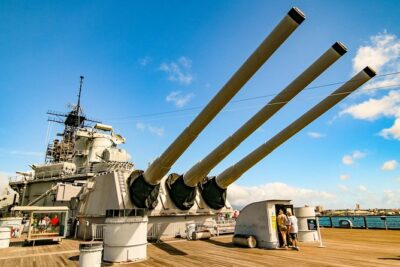
The guided deck experience includes viewing:
- officer and crew quarters
- artillery positions
- a kamikaze aircraft crash
- a Surrender ceremony
A key difference here is tone. USS Arizona is quiet and mournful. Missouri brings history into a more narrative, documentary-style sequence through the physical spaces—what crew lived with, what the ship was built to do, and how the surrender moment fits into that larger story.
If you like tangible, hands-on history, this stop usually lands well. You’re not only looking at what’s left. You’re walking through what was built, how it worked, and what took place there.
USS Oklahoma Memorial: Ford Island’s land-based reminder
After Missouri, you’ll go to the USS Oklahoma Memorial on Ford Island. This is scheduled for about 2 hours and described as the only land-based memorial at Pearl Harbor.
This one honors more than 400 servicemen lost aboard USS Oklahoma during the attack. It’s noted as second only in casualties to USS Arizona on that fateful day. That detail matters because it helps you understand why the memorial is separate—this was not just one ship, one tragedy, and one story.
Since it’s land-based, you experience it a little differently than Arizona. You don’t get the same underwater wreck-view moment. Instead, the meaning is carried through the memorial space itself and the focus on those who were lost in the flurry of attacks.
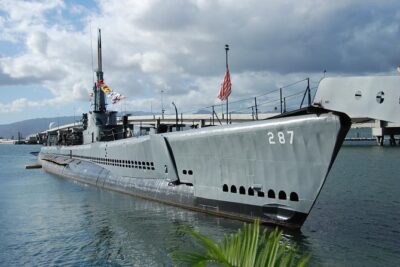
The Missouri deck and the Bowfin hatches, other combos
- Oahu: Pearl Harbor USS Arizona Memorial & Battleship Missouri
★ 4.5 · 2,276 reviews - Pearl Harbor: USS Arizona Memorial & USS Missouri Battleship Tour from Waikiki
★ 4.5 · 1,445 reviews - Pearl Harbor Arizona Memorial – Honolulu Tour – Submarine Access
★ 3.5 · 767 reviews - Honolulu: Pearl Harbor, USS Arizona and Battleship Missouri
★ 4.5 · 367 reviews
Downtown Honolulu: a quick shift to Hawaii’s real-day rhythm
Once the Pearl Harbor stops are done, the tour moves into Downtown Honolulu for about 45 minutes. Admission there is free.
This segment is meant to balance the day. Instead of only war sites, you get a narrated look at Hawaii’s cultural heritage, historic elements, and modern city life. It’s a helpful breathing space, and it also sets you up to understand why places like Punchbowl and the palaces matter in a broader Hawaiian story, not just a WWII story.
If you only want “battlefield and ships,” this might feel like a detour. But if you want to leave Honolulu with a fuller picture of the islands, the city stop keeps the day from becoming one long memorial loop.
Punchbowl (National Memorial Cemetery of the Pacific): views from an extinct volcano
Next is the National Memorial Cemetery of the Pacific, located on top of an extinct volcano known as Punchbowl. You get about a “final resting place” experience: thousands of U.S. military members are laid to rest here, and the grounds are described as beautifully maintained, with rows of white headstones set against lush greenery.
The part I’d plan for is the setting. Punchbowl gives you stunning views over Honolulu, including downtown, Diamond Head, and the coastline. That mix of quiet cemetery space and wide city views can feel unusual at first, but that’s the point. It connects remembrance with the place where people live today.
This stop is also one of those moments where your camera can’t fully capture the mood. The real value is walking the grounds and looking out—feeling how the land holds both grief and daily life.
Iolani Palace: Hawaii’s monarchy stories, inside an iconic building
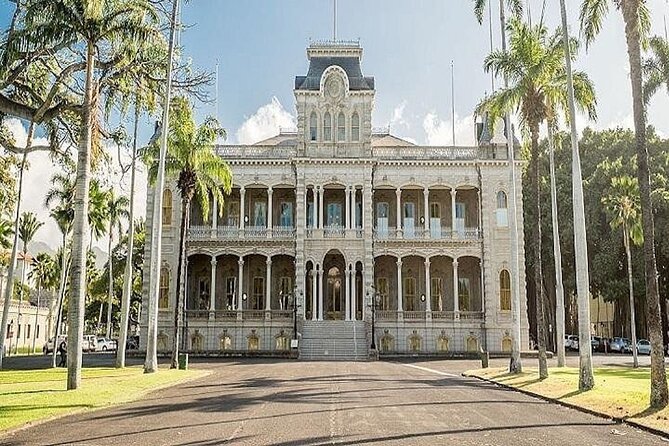
After Punchbowl, you’ll spend about 15 minutes at Iolani Palace, with admission free. This is described as the only royal palace in the United States, and the guide’s narration covers Hawaii’s monarchy through stories of King Kalākaua and Queen Liliʻuokalani, the last reigning monarchs.
Even with limited time, Iolani Palace works well on this kind of tour because it changes the lens. After the WWII ship focus, monarchy and sovereignty stories bring another essential context to the islands.
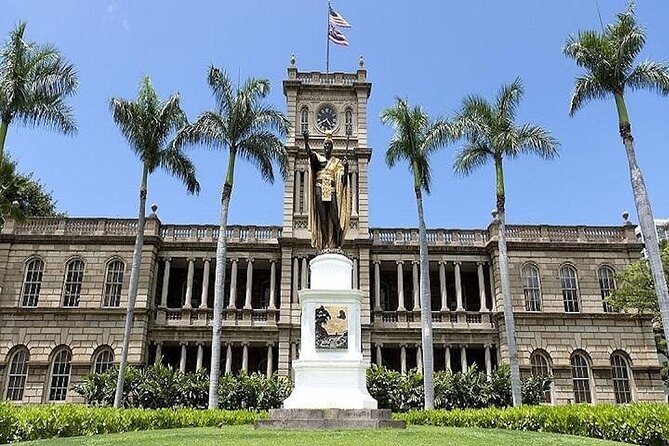
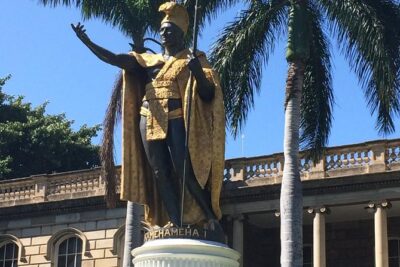
From there, the tour includes a view of the King Kamehameha Statue, in front of Aliʻiōlani Hale, which now houses the Hawaii State Supreme Court. You’ll also get “talk story” about the site as the original government building of the Hawaiian Kingdom.
If you’re the type of person who likes learning the names behind the landmarks, this is one of the best segments to grab those details fast.
Kawaiahaʻo Church: old worship, called Westminster Abbey of the Pacific
The day also includes Kawaiahaʻo Church, often referred to as the Westminster Abbey of the Pacific. It’s described as one of the oldest Christian places of worship in Hawaii, and your guide shares its significance and role in Hawaii’s religious history.
This stop may be short, but it’s a meaningful one. After palaces and cemetery views, it adds another thread: how faith and community shaped the islands over time. Even if you’re not religious, the story helps you connect the buildings to real people and real traditions.
Price and what you’re actually getting for $116.99
At $116.99 per person, this tour can look like a lot until you break down what’s included and what isn’t.
Included:
- Waikiki pickup and drop-off
- air-conditioned vehicle
- expert narration across Pearl Harbor and Honolulu stops
- entry tickets provided by your guide for the attractions on the tour
- access to the major memorials: Arizona, Missouri, Oklahoma plus the Visitor Center film and boat process
Not included:
- meals (you pay on your own)
- any off-site shopping or extra attractions
- and importantly, Pearl Harbor bag storage if you bring a bag you can’t take inside (storage is $7.00 each)
There are on-site dining options at the Visitor Center and near Battleship Missouri, like food trucks, snack stands, or cafes, so you’re not locked out of food just because you didn’t plan. Still, you should budget meals separately.
For value, this is the kind of day where “tickets handled” really matters. Pearl Harbor is in demand, and this tour is built to avoid the ticket hunt.
Logistics that make or break the day: bags, shoes, silence, weather
A few practical things can change your experience fast—so I’d treat them like packing rules, not suggestions.
Bags and purses at Pearl Harbor
Purses and bags aren’t allowed inside Pearl Harbor. If you need storage, bags can be stored for $7.00 each. Clear plastic bags are allowed as long as the contents are readily visible (the guidance compares them to those allowed at football games). If you want fewer hassles, keep it to a phone, wallet, and essentials in pockets.
Wear comfortable shoes
You’ll be walking much of the tour. The guidance also notes it’s not recommended if you can’t walk about 4 city blocks. That doesn’t mean it’s a hardcore hike, but the pace plus memorial grounds adds up over a 7–9 hour day.
Respectful silence at USS Arizona Memorial
Visitors are encouraged to maintain respectful silence while on the USS Arizona Memorial. If you want to keep your voice low and your phone away, you’ll match the tone naturally.
No smoking and no swimwear
No smoking is allowed on the visitor center grounds or at the memorial. No swimwear is allowed either.
Weather matters
Sites are subject to close due to stormy weather, and the experience requires good weather. If weather disrupts things, you’ll be offered a different date or a full refund. That’s not something you can control, but it helps to know the day isn’t guaranteed if conditions are rough.
One small tip I’d copy
Bring sunglasses and plan for hydration. In the provided experience feedback, people praised guides for having water and for reminding them what to bring. On an early start day, that kind of practical care makes the difference between a smooth day and a grumpy one.
Who this tour is best for (and who should think twice)
This is ideal if you:
- want Pearl Harbor entry handled and don’t want to gamble on ticket timing
- care about WWII context and want narration tied to what you’re seeing
- also want Honolulu sites like Punchbowl and Iolani Palace, not only military history
It may not be your best fit if:
- you want museum-heavy time at Pearl Harbor (this tour focuses on memorials, not the museum visit)
- you’re sensitive to long walking or can’t handle about 4 city blocks
Should you book this Battleships of WWII tour from Waikiki?
If you want a day that combines the big memorials—USS Arizona, USS Missouri, and USS Oklahoma—with Honolulu landmarks like Punchbowl and Iolani Palace, this tour is a strong match. The most compelling reason to book is simple: guaranteed admission plus guided ticket handling, which saves stress when Pearl Harbor is famously hard to plan around.
I’d book it if you like clear structure, a small group (max 24), and a guide who connects places to the story. I would think twice if you need museum time or you’re unsure about walking comfort. Otherwise, this is the kind of well-paced day where you come away with facts, context, and a lot of quiet, memorable moments in the right order.
FAQ
What time does this tour start?
The tour start time is 7:00 am.
Does pickup and drop-off include Waikiki?
Yes. Pickup and drop-off in the Waikiki area is included, and the tour also lists specific pickup points for Southwest and Hawaiian Airlines arrivals.
Are tickets included for the Pearl Harbor and memorial stops?
Yes. Entry tickets to the attractions on your tour will be provided by your guide on the day of your tour.
What are the rules for bags at Pearl Harbor?
Purses and bags are not allowed inside Pearl Harbor. Bags may be stored for $7.00 each. Clear plastic bags are allowed if the contents are readily visible.
Is lunch included?
No. Meals are at your own expense, though there are on-site dining options near the Visitor Center and near Battleship Missouri.
What happens if weather is bad?
The experience requires good weather, and sites are subject to close due to stormy weather. If it’s canceled due to poor weather, you’ll be offered a different date or a full refund.
Also on the Honolulu List
- Oahu Grand Circle Island and Haleiwa Tour: 9-Hr Deluxe Experience★ 5.0 · 17,387 reviews
- Oahu: Grand Tour Around Island 16 Locations plus Snorkeling★ 5.0 · 8,669 reviews
- Salute to Pearl Harbor Including USS Arizona★ 4.5 · 7,433 reviews
- Majestic Circle Island Tour with Lunch★ 5.0 · 7,014 reviews
Decks, Turrets and Torpedo Rooms
- Oahu: Pearl Harbor USS Arizona Memorial & Battleship Missouri★ 4.5 · 2,276 reviews
- Pearl Harbor: USS Arizona Memorial & USS Missouri Battleship Tour from Waikiki★ 4.5 · 1,445 reviews
- Pearl Harbor Arizona Memorial – Honolulu Tour – Submarine Access★ 3.5 · 767 reviews
- Honolulu: Pearl Harbor, USS Arizona and Battleship Missouri★ 4.5 · 367 reviews
Pearl Harbor, Planned Three Ways
- Salute to Pearl Harbor Including USS Arizona★ 4.5 · 7,433 reviews
- Oahu: Pearl Harbor USS Arizona Memorial★ 4.5 · 5,209 reviews
- Pearl Harbor Remembered Tour★ 5.0 · 5,143 reviews
- Pearl Harbor, USS Arizona Memorial & Honolulu City Tour★ 5.0 · 4,866 reviews
The Latest from Kalakaua Avenue and Beyond


Battleship Missouri & Bowfin Submarine, compared.
 ★ 4.5Pearl Harbor USS Arizona Memorial & Battleship MissouriFrom $1492,276 reviews
 ★ 4.5Pearl Harbor: USS Arizona Memorial & USS Missouri Battleship Tour from WaikikiFrom $1571,445 reviews
 ★ 3.5Pearl Harbor Arizona Memorial – Honolulu Tour – Submarine AccessFrom $74767 reviews
 ★ 4.5Pearl Harbor, USS Arizona and Battleship MissouriFrom $156367 reviews
 ★ 4.5Pearl Harbor USS Arizona Memorial & Battleship MissouriFrom $149129 reviews
 ★ 4.7Battleship Missouri Memorial with Guide OptionFrom $39120 reviews
 ★ 4.5Deluxe Arizona Memorial and USS Missouri Battleship TourFrom $139100 reviews
 ★ 4.5Private USS Arizona and USS Missouri Pearl Harbor TourFrom $38597 reviews
Browse the lists this tour appears in