
REVIEW · HISTORIC DOWNTOWN & PALACE TOURS
Bishop Museum General Admission Ticket
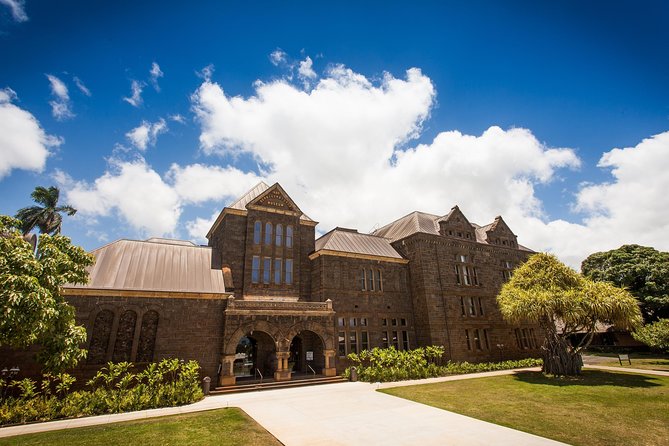
This museum tells Hawaii’s story up close. With general admission to Bishop Museum, you can move at your pace through Hawaiian culture, Pacific connections, and science that explains how the islands formed. It’s the kind of place where you’ll spend more time looking at objects than you expect.
I like the way the campus bundles Hawaiian Hall Complex with interactive learning, not just glass-case browsing. The planetarium and the science exhibits (including lava-focused shows when available) add variety on a day that might be hot or rainy. The one drawback: it’s a big complex, and some specific areas or programs may be closed on certain days, so you’ll want extra time and a flexible plan.
In This Review
- Quick Hits Before You Go
- Bishop Museum General Admission: What You’re Really Buying
- How Long Should You Plan? 1 to 8 Hours on a Big Campus
- Hawaiian Hall Complex: Your Best First Stop for Hawaiian Culture
- Pacific Hall: Migrations, Settlement, and the Bigger Map
- Jhamandas Watumull Planetarium: Skies of Hawai‘i and Polynesia
- Richard T. Mamiya Science Adventure Center and Lava Learning
- Castle Memorial Building: Temporary Exhibits, Choose It Wisely
- Staff Help, Indoor Time, and the Campus Feel
- Price and Value: Is $38.95 Worth It?
- Who Should Buy This Ticket?
- Should You Book This Bishop Museum General Admission Ticket?
- FAQ
- What does the Bishop Museum general admission ticket include?
- How much is the ticket?
- How long should I plan to spend there?
- Is the planetarium show included with admission?
- Are parking fees included?
- Do I need moderate physical fitness?
- Does the museum cancel if the weather is bad?
- Can I get a refund if I cancel?
Quick Hits Before You Go
- Start with Hawaiian Hall Complex for the clearest entry point into Hawaiian culture and history.
- Pacific Hall gives context fast with migration and settlement themes across the Pacific Islands.
- Jhamandas Watumull Planetarium is a big draw—check whether a show is running during your visit.
- Richard T. Mamiya Science Adventure Center is hands-on with lava learning and live show opportunities when scheduled.
- Castle Memorial Building depends on what’s on—skip it if you’re short on time and focus elsewhere.
Bishop Museum General Admission: What You’re Really Buying
For $38.95 per person, you’re paying for general admission to the Bishop Museum campus in Honolulu. That ticket is simple: it gets you into the museum spaces so you can choose how long to stay and what to prioritize.
The catch is that not every optional add-on is automatically covered. The planetarium show is listed as optional, and special exhibit fees are not included. Parking is also optional and extra, so if you’re driving, build that into your budget.
The best value is when you treat this like a half-day or full morning. You’re not just buying one exhibit. You’re getting access to multiple major buildings, including culture halls and a science center that can keep kids (and adults with curious brains) busy for a while.
How Long Should You Plan? 1 to 8 Hours on a Big Campus
This general admission ticket works for quick visits or deep visits, with an estimated range of 1 to 8 hours. My practical advice: plan at least half a day if you actually want to understand what you’re seeing, not just skim.
A common mistake is showing up late, moving fast, and then realizing you ran out of time. If you’re hoping to catch everything—Hawaiian Hall, Pacific Hall, plus science—you’ll feel rushed if you arrive near the end of the day. Also, indoor time can stretch when you hit exhibits with maps, detailed craft displays, and objects you want to study.
If you love reading labels and looking closely, you can easily go long. The museum feels like several small museums in one campus, so you’ll keep discovering things while you try to decide what to do next. And if you’re traveling with kids, keep the “short attention span” factor in mind by building in breaks in the science areas.
Iolani, Chinatown and the old capital blocks, more angles


Hawaiian Hall Complex: Your Best First Stop for Hawaiian Culture
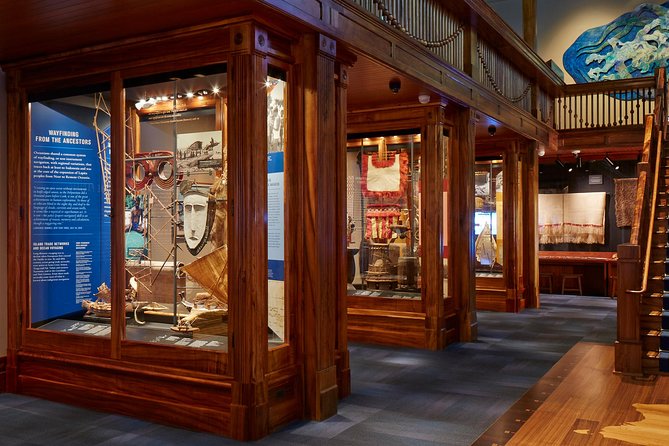
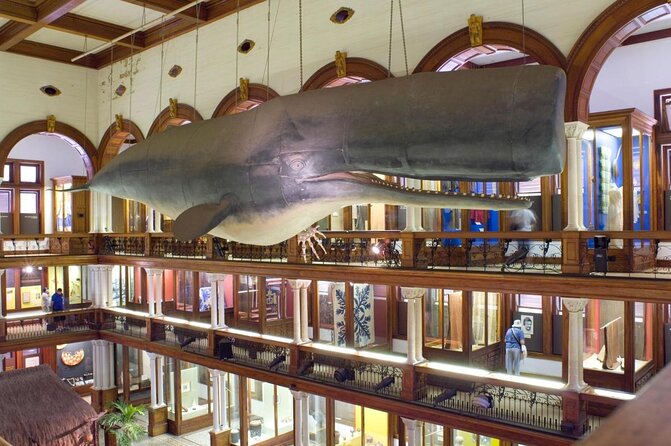
The Hawaiian Hall Complex is the core of the museum campus. It’s described as the world’s premier showcase of Hawaiian history and culture, and you can feel that when you walk in: this is where the museum sets its tone.
Plan to spend real time here. You’ll get a strong foundation that helps the later halls make sense. Hawaiian history is not a sidebar at Bishop Museum—it’s the main course.
There are also details that can turn into favorites. In the museum, people tend to remember specific craft and artifact rooms, like the feathered Kahili area. If you enjoy objects with deep symbolism, this is the place to slow down.
Pacific Hall: Migrations, Settlement, and the Bigger Map
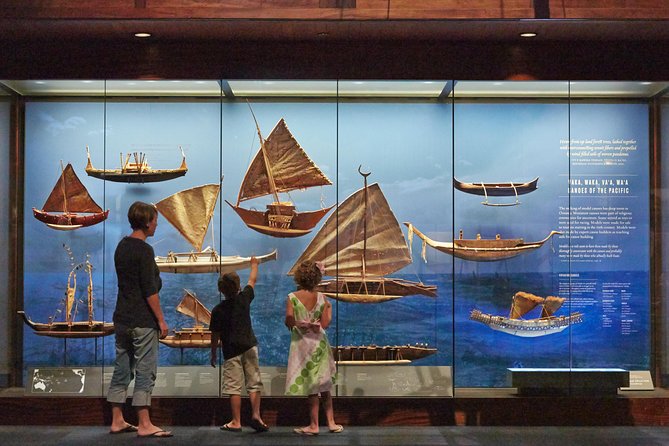
Once you’ve built that Hawaiian context, Pacific Hall is the next smart move. This section focuses on origins, culture, and values of Pacific people, with migrations and settlement across the Pacific Islands.
If you like exhibits that explain connections—how people moved, how communities formed, how ideas traveled—this hall is designed for that kind of attention. One of the standout ways it does this is through large mapping and detailed explanation of origins, including the concept of indigenous origins connected to Hawaiian people.
Look for displays tied to everyday knowledge and traditional material culture, too. Some visitors especially remember the fishing hook display and woven mats. Those are the types of objects that make the story feel less abstract.
Jhamandas Watumull Planetarium: Skies of Hawai‘i and Polynesia
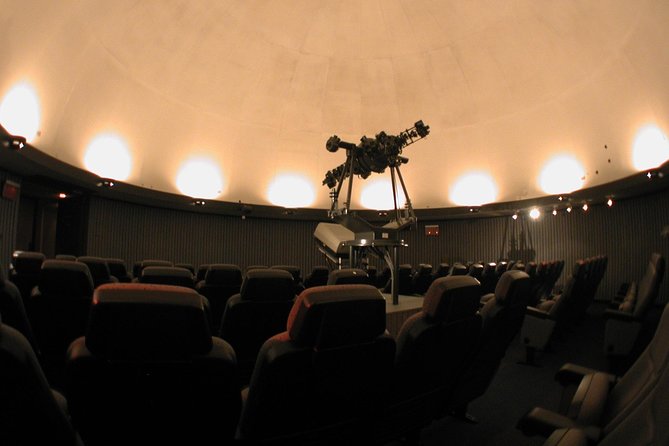
The Jhamandas Watumull Planetarium is where the museum shifts from objects on tables to the sky. The experience is built around exploring the skies of Hawai‘i and Polynesia, and it’s connected to how ancient travelers understood the stars.
However, the important practical point: shows aren’t always available. The planetarium being closed (at least on some dates) is a recurring issue you should plan around. Since the planetarium show is also listed as optional, I’d treat it like a bonus you try to catch, not the foundation of your day.
If planetarium timing matters to you, check the schedule before you commit to a route. Even if a show isn’t running, the museum is still worth it for the culture and science buildings. But if astronomy is your top priority, you’ll want that extra planning cushion.
More entry passes worth sorting before the trip
- Rock-A-Hula Ticket
★ 4.5 · 448 reviews - Diamond Head Hike Shuttle with Reservation Tickets Included
★ 5.0 · 223 reviews - Diamond Head Hiking Tour with Ticket and Reservation Inclusion
★ 4.5 · 103 reviews - Oahu : Hanauma Bay Admission Ticket+Equipment Rental
★ 4.0 · 84 reviews
Richard T. Mamiya Science Adventure Center and Lava Learning
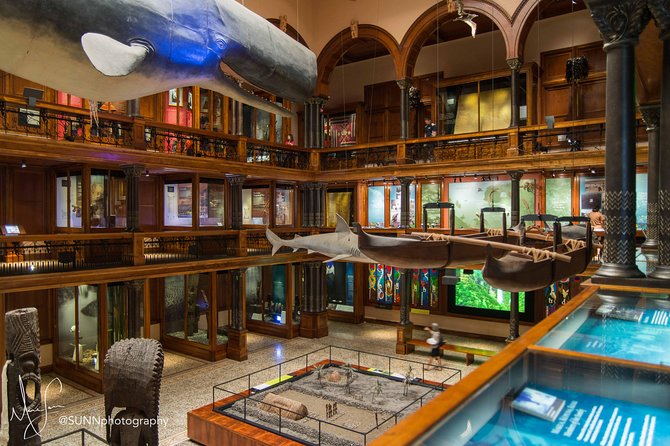
The Richard T. Mamiya Science Adventure Center is where Bishop Museum earns its reputation as more than a history museum. It’s built for interactive learning, with a focus on science as it relates to Hawai‘i and Pacific environments.
Lava is the big theme. You’ll see learning tied to how lava and the formation of the Hawaiian Islands connect to the islands you’re traveling on. The science is presented in ways that are easy to follow, even if you’re not a self-professed science person.
A live lava melting show is listed as part of this experience area. In practice, you should expect that demonstrations can vary by day. On some visits, the live demonstration may not happen exactly as you hoped, but even if the show is skipped, the interactive exhibits still provide plenty of takeaways—especially for families.
Castle Memorial Building: Temporary Exhibits, Choose It Wisely
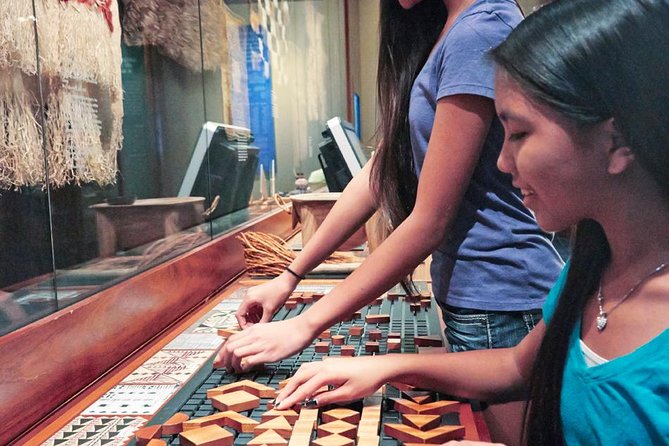
The Castle Memorial Building is the campus building for changing exhibits for a limited time. That means it can be great—on the right day—or it can be less of a priority if you’re short on time.
Some people decide to skip this building entirely because they found it less compelling compared with the culture halls and the science center. If you’re visiting with limited time, I’d use a simple rule: if you have energy and it looks interesting when you arrive, go. If you’re tired or you’re behind schedule, don’t force it.
Because exhibits change, this is also the building most likely to feel different from one trip to another. Temporary content can make the museum feel fresh, but it also makes it harder to predict how much you’ll love it.
Staff Help, Indoor Time, and the Campus Feel
Bishop Museum isn’t laid out like a single straight hallway with everything at the same pace. It’s a campus with multiple buildings, and the overall feel is expansive—beautiful architecture, solid museum staffing, and plenty of indoor options.
That matters because Hawaii weather can shift. The experience is set to operate in all weather conditions, so dressing appropriately is your job, not the museum’s. If it’s raining, the museum’s indoor setup becomes a relief instead of a compromise.
One more practical note: you should have a moderate physical fitness level. You’ll be walking between buildings and spending time on your feet inside galleries. It’s not a hardcore trek, but it is enough movement that you should wear comfortable shoes.
Also, the museum is near public transportation, which is handy if you’re not driving. And service animals are allowed.
Price and Value: Is $38.95 Worth It?
At $38.95 per person, this ticket isn’t a steal deal. It’s also not priced like a disposable activity. The value comes from the fact that admission covers access to multiple major areas: cultural halls, a planetarium building, and the science center.
So the decision becomes: will you actually use the time? If you only spend a quick hour or two, you might feel like you paid for a lot of space you didn’t fully explore. If you give yourself at least half a day, the ticket starts to feel fair—because you’re not just seeing one section, you’re building a fuller picture of Hawai‘i and the Pacific.
Also remember that some program elements can be unavailable on certain days, including the planetarium show. If you’re coming specifically for a particular show, that uncertainty can affect perceived value. The science center’s lava show can also vary.
If you’re price-checking, it’s worth verifying the day-of admission details with Bishop Museum directly. Some travelers have run into confusion around ticket pricing, and the safest way to avoid regret is simple: confirm before you arrive.
Who Should Buy This Ticket?
This general admission ticket is best if you want a structured way to understand Hawai‘i without relying on a bus tour schedule. It’s strong for:
- Families who want interactive science time plus culture halls
- Couples who want a calm day with indoor breaks and strong exhibits
- History and culture nerds who like maps, artifacts, and craft rooms
- Rain-day planners who want an indoor anchor near Honolulu
If you’re short on time and only want one type of experience—say only astronomy or only one culture hall—this ticket can still work, but you’ll need to pick priorities fast and accept that you won’t see everything.
Should You Book This Bishop Museum General Admission Ticket?
Yes, you should book it if you’re the type of person who likes context—why a people migrated, how culture survived, and how the land itself shaped everything. Bishop Museum is one of the top museum attractions in Hawaii, and its campus approach is a big part of why.
Book it with the expectation that you’re visiting several places in one day. Give yourself enough hours to move beyond the highlights, especially if Hawaiian Hall and Pacific Hall are on your must-see list. If the planetarium show is essential to your plan, confirm it before you go so you’re not relying on a bonus that may be unavailable.
If you want a quick hit and you hate walking between buildings, you may prefer a more focused attraction. But for most visitors, Bishop Museum general admission is a solid use of time in Honolulu—one that makes Hawai‘i feel less like a postcard and more like a place with real stories.
FAQ
What does the Bishop Museum general admission ticket include?
Your ticket includes admission to Bishop Museum. Some items like the planetarium show and special exhibits can cost extra if offered.
How much is the ticket?
The price is listed as $38.95 per person.
How long should I plan to spend there?
The experience is described as about 1 to 8 hours, depending on how much of the campus you want to see.
Is the planetarium show included with admission?
No. The planetarium show is optional and not included in the general admission.
Are parking fees included?
No. Parking fees are optional and not included.
Do I need moderate physical fitness?
Yes. The information says travelers should have a moderate physical fitness level.
Does the museum cancel if the weather is bad?
The experience requires good weather, and if it’s canceled due to poor weather, you’ll be offered a different date or a full refund.
Can I get a refund if I cancel?
Yes. There is free cancellation up to 24 hours in advance for a full refund. Canceling within 24 hours is not refundable.
Passes and Entries, Honolulu
- Rock-A-Hula Ticket★ 4.5 · 448 reviews
- Diamond Head Hike Shuttle with Reservation Tickets Included★ 5.0 · 223 reviews
- Diamond Head Hiking Tour with Ticket and Reservation Inclusion★ 4.5 · 103 reviews
- Oahu : Hanauma Bay Admission Ticket+Equipment Rental★ 4.0 · 84 reviews
Also on the Honolulu List
- Oahu Grand Circle Island and Haleiwa Tour: 9-Hr Deluxe Experience★ 5.0 · 17,387 reviews
- Oahu: Grand Tour Around Island 16 Locations plus Snorkeling★ 5.0 · 8,669 reviews
- Salute to Pearl Harbor Including USS Arizona★ 4.5 · 7,433 reviews
- Majestic Circle Island Tour with Lunch★ 5.0 · 7,014 reviews
From Iolani to Chinatown
- Pearl Harbor, USS Arizona Memorial & Honolulu City Tour★ 5.0 · 4,866 reviews
- Pearl Harbor City Tour★ 5.0 · 4,254 reviews
- Oahu: Mauka Warriors Luau Honoring Polynesia’s Forgotten History★ 5.0 · 3,013 reviews
- Pearl Harbor, National Memorial Cemetery and Honolulu City Tour★ 4.5 · 1,777 reviews
The Latest from Kalakaua Avenue and Beyond




Historic Downtown & Palace Tours, compared.
 ★ 5.0Pearl Harbor, USS Arizona Memorial & Honolulu City TourFrom $944,866 reviews
 ★ 5.0Pearl Harbor City TourFrom $694,254 reviews
 ★ 5.0Mauka Warriors Luau Honoring Polynesia’s Forgotten HistoryFrom $1453,013 reviews
 ★ 4.5Pearl Harbor, National Memorial Cemetery and Honolulu City TourFrom $591,777 reviews
 ★ 4.5Tribute to Pearl Harbor Arizona Memorial and Honolulu City TourFrom $45733 reviews
 ★ 4.0Pearl Harbor USS Arizona Memorial and Honolulu City Tour460 reviews
 ★ 4.5Deluxe Pearl Harbor USS Arizona Memorial and Honolulu City TourFrom $47411 reviews
 ★ 5.0Grand Pearl Harbor and City TourFrom $69342 reviews
Browse the lists this tour appears in