
REVIEW · MANOA FALLS & RAINFOREST HIKES
Honolulu: Hawaiian Volcanic Rainforest Hike
Rainforest hikes in Honolulu hit different. This one takes you up an ancient volcano slope through a native Hawaiian forest, then rewards you with wide views across the Ko’olau Mountains and out toward the Pacific Ocean.
I also like the practical setup: professional nature guides point out the plant life and the big-picture geography as you go. The main drawback is simple—you do need decent effort. Expect a moderate climb with 600 feet of elevation gain, plus muddy trail conditions if it’s been raining.
In This Review
- Key points that make this hike worth your time
- Why this Honolulu hike feels like a real Hawaii moment
- Getting to the trail: pickup zones and a tight 3-hour window
- The 600-foot climb: moderate, but don’t treat it like a casual stroll
- Native rainforest and the Ko‘olau Mountain “big picture”
- The view payoff: Honolulu, Waikiki, Pearl Harbor, Kailua, and ocean shimmer
- Le’ahi (Diamond Head) and the thrill of spotting volcano shapes from far away
- How the guide makes (or breaks) a rainforest hike
- What’s included vs. what you should pack yourself
- Price and value: what $90 buys you in real life
- Who should book this hike (and who should skip it)
- Should you book the Honolulu Hawaiian Volcanic Rainforest Hike?
- FAQ
- How long is the Honolulu Hawaiian Volcanic Rainforest Hike?
- What views can I expect during the hike?
- How difficult is the hike?
- Is the tour family-friendly?
- What transportation is included?
- What should I bring?
Key points that make this hike worth your time
- Volcano + rainforest in one hike: you’re not doing a beach-only day
- View payoff at a moderate effort: 600 feet of elevation gain, not a long grind
- Native forest with rare and endemic plants: the walk is educational, not just pretty
- Big O‘ahu sightlines: Honolulu, Waikiki, Pearl Harbor, Kailua, and the ocean are in range on clear days
- Le’ahi (Diamond Head) views plus the sense of being surrounded by two mountain ranges
Why this Honolulu hike feels like a real Hawaii moment
O‘ahu can feel split in two. One side is beaches, hotels, and ocean photos. The other side is mountains—shaded, cooler, and full of life. This hike gives you the mountain side without sending you off alone with a map and wishful thinking.
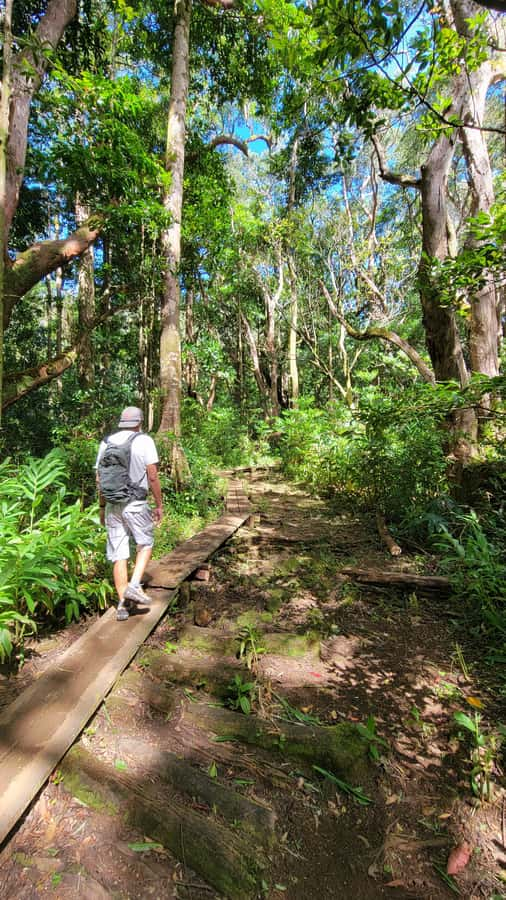
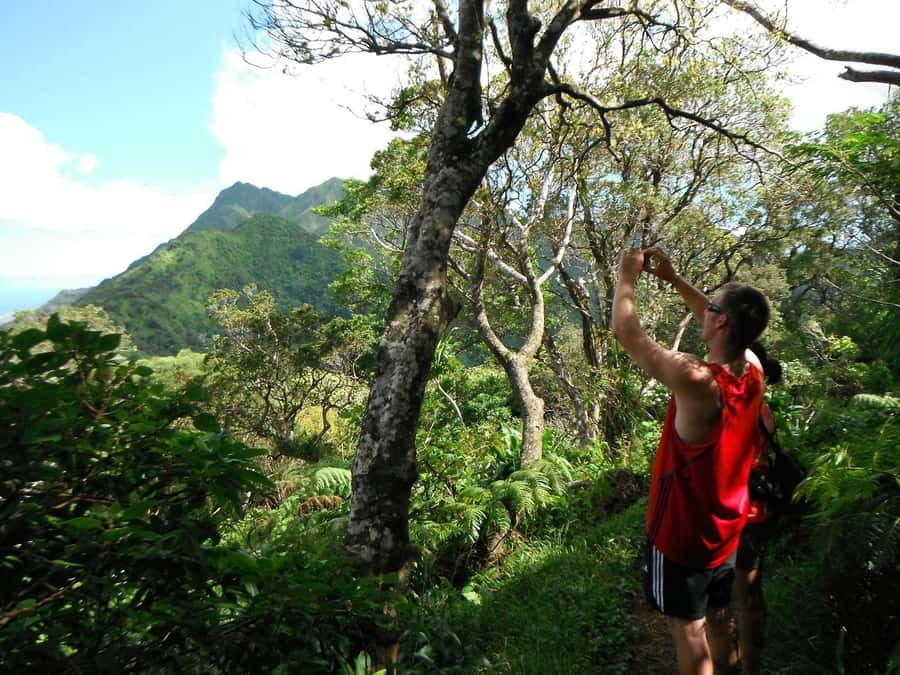
The best part is the combination: you’re walking along the slopes of an ancient volcano, but you’re not hiking through dry “tropical” landscaping. You’re in a lush rainforest preserve where the guide can help you notice what’s special about Hawaii’s native plants. That changes the whole mood of the trip. You’re not just taking pictures—you’re learning why the forest looks the way it does and what you’re seeing as the trail climbs.
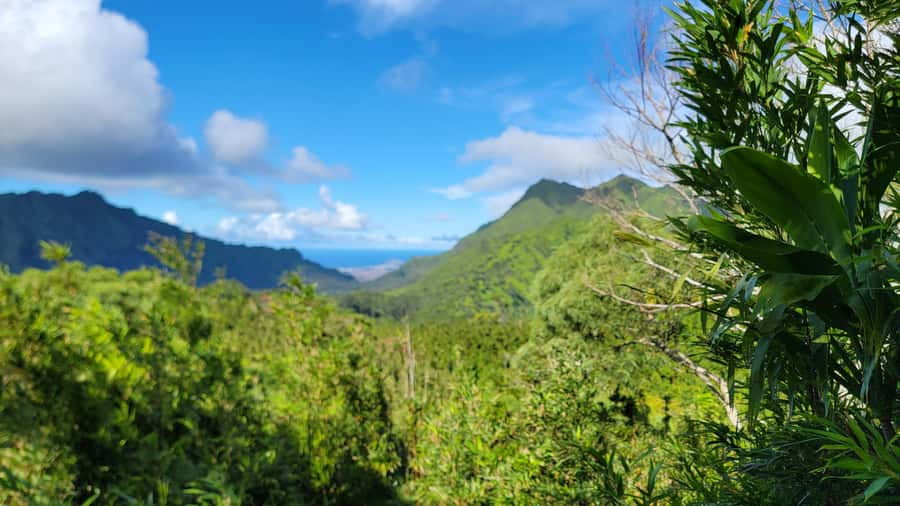
And yes, the views are a big reason to book. You’ll get distant lookouts that can include Honolulu, Waikiki, Pearl Harbor, Kailua, and the shimmering Pacific. It’s the kind of panorama that makes you realize the island’s cities didn’t just appear by accident. They sit right between mountains and water.
Getting to the trail: pickup zones and a tight 3-hour window
This activity runs about 210 minutes, so it’s short enough to fit into a day without wrecking your schedule. Check availability for starting times, but once you’re on the clock, you’re usually looking at roughly a morning or afternoon block rather than an all-day outing.
Convenience is built in. You get complimentary round-trip transportation from Kahala, Waikiki, and Aloha Tower. That matters because the hike is the main event; you don’t want half your energy spent figuring out parking or routing on unfamiliar roads.
It also means the group stays together from the start. You’ll get rain gear and small essentials from the operation, then you head out as a unit. That’s helpful if you’re not used to hiking in tropical weather. One less worry, more time for the trail.
More mud, more green: other waterfall walks


The 600-foot climb: moderate, but don’t treat it like a casual stroll
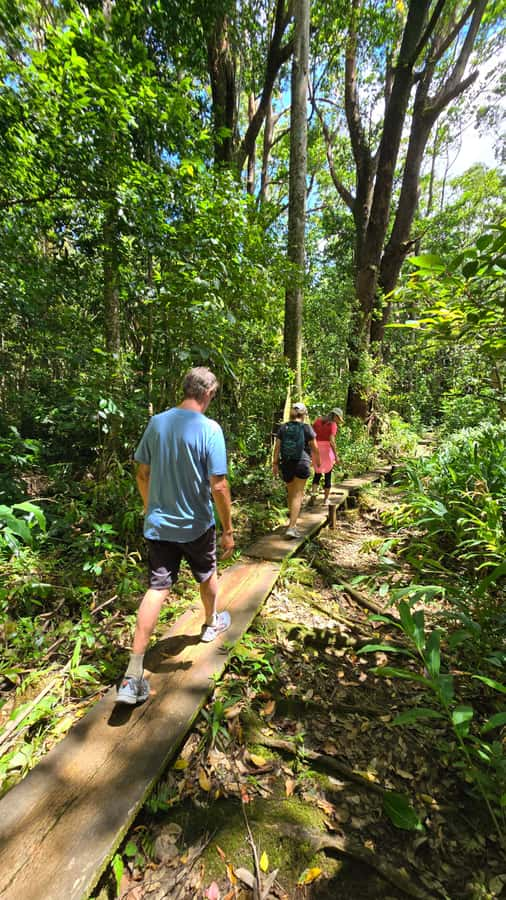
The hike is described as moderate, with about 600 feet of elevation gain. That sounds manageable on paper. On the ground, it can feel like a steady uphill push—especially because rainforest trails can be slick, and your footing matters more than your pace.
Here’s how I’d think about it if you’re deciding whether you should go:
- If you can comfortably walk uphill for a short stretch and keep your footing, you’ll likely be okay.
- If stairs or hills regularly slow you down, you’ll probably feel this one more than you want.
The tour info also flags an above-average fitness level requirement. That doesn’t mean you need to be a mountain athlete. It does mean you should take the physical side seriously. Wear sturdy shoes with good traction. Closed-toe shoes aren’t optional for safety.
One more thing: if it’s been wet, the “easy” parts can get slippery fast. Stamina and balance both count.
Native rainforest and the Ko‘olau Mountain “big picture”
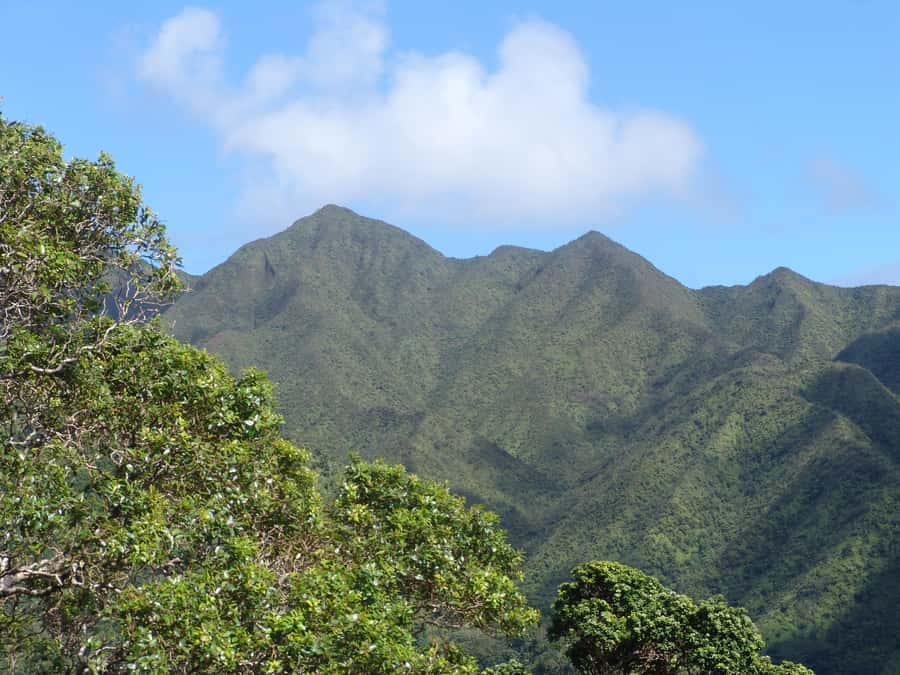
What makes this more than a scenic walk is the way the hike connects the forest to the geography. You’re moving through a native forest preserve that includes rare and endemic plant species. That’s not just trivia. In Hawaii, native plants evolved in isolation, so they often look and grow differently than what you’ll find on mainland trails.
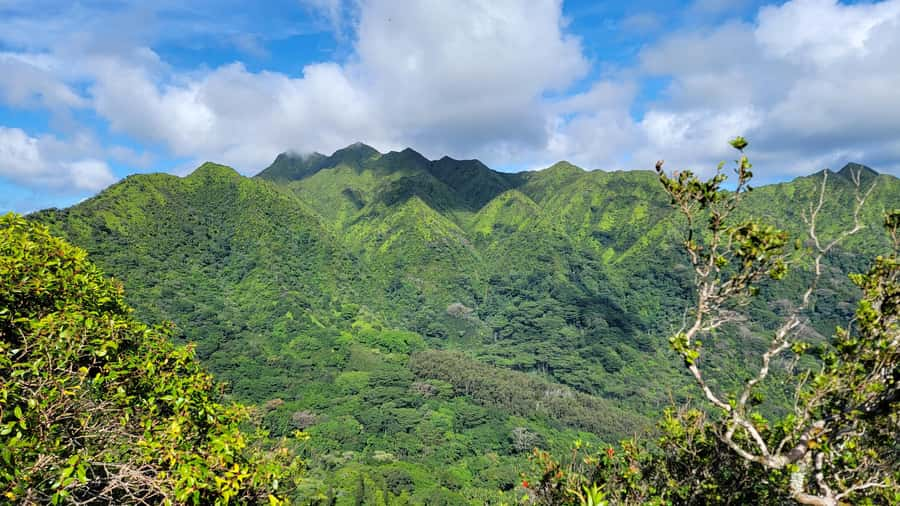
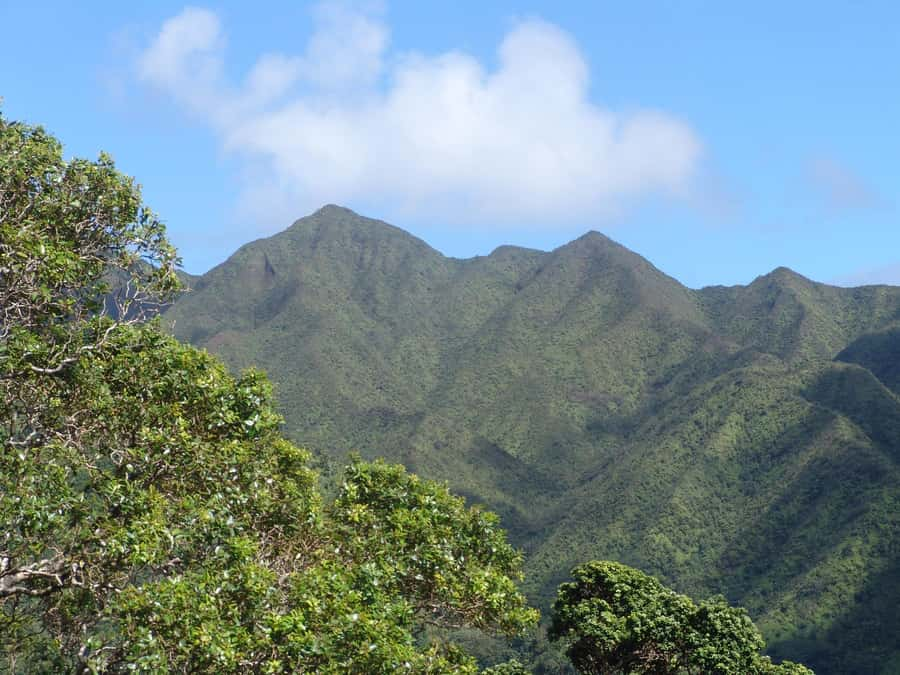
As you hike, the guide helps you understand the two parallel mountain ranges of O‘ahu. You’re on the slopes of the Ko‘olau Mountain range, and the views are framed so you can spot major high points—at least in clear conditions.
The “highest point” notes are part of the story:
- Konahuanui (3150 feet), the highest point of the Ko‘olau range
- Mt. Ka‘ala (4025 feet), the highest point of O‘ahu
Even if you can’t pinpoint a summit perfectly, the guide makes the skyline feel legible. You stop looking at the horizon like a postcard and start reading it like terrain.
The view payoff: Honolulu, Waikiki, Pearl Harbor, Kailua, and ocean shimmer
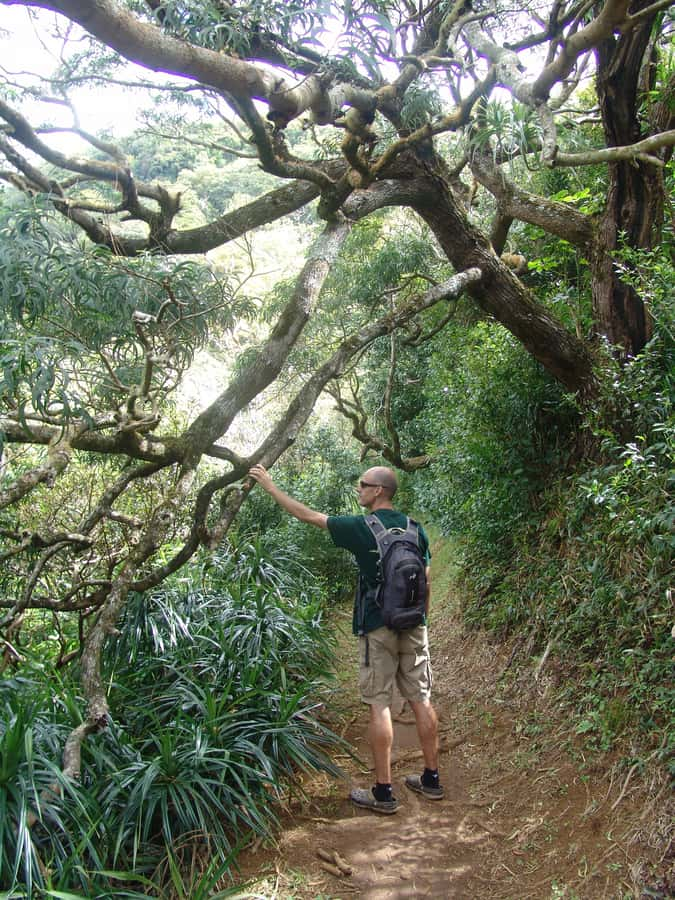
This hike is built around earning visibility. As you climb, the rainforest opens up at times into sweeping outlooks where you can take in multiple corners of O‘ahu.
On a clear day, you might see:
- Honolulu and Waikiki
- Pearl Harbor
- Kailua
- the shimmering Pacific Ocean
These are not random targets. They help you understand how the island’s water, cities, and mountain ridges line up. When you stand high enough, you can appreciate the shape of the coast and how mountain slopes channel weather and light.
Practical tip: bring your phone, of course, but also expect that the best moments can be brief. Tropical weather changes quickly. Keep an eye on the sky, and don’t wait for the perfect shot if the view starts clearing—you might not get another pass.
Other ridgelines with a view of town
- Self guided Hike Trail to Nature Walk & Waterfall
★ 4.5 · 283 reviews - Manoa Falls Rainforest & Self-Guided Hike
★ 4.5 · 227 reviews - Diamond Head Hike Shuttle with Reservation Tickets Included
★ 5.0 · 223 reviews - Manoa Waterfall Hike with Waikiki Pickup & Healthy Lunch
★ 4.5 · 185 reviews
Le’ahi (Diamond Head) and the thrill of spotting volcano shapes from far away
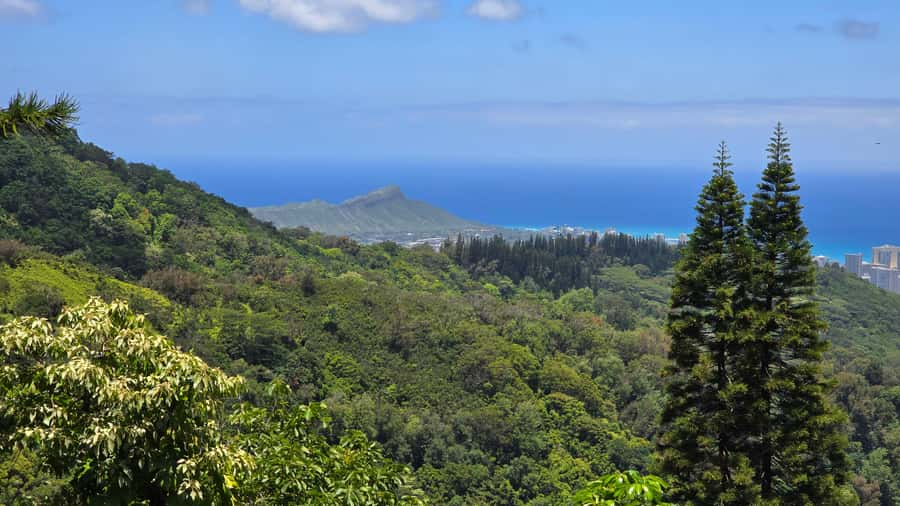
One of the highlights listed for this experience is Le’ahi (Diamond Head) volcano crater. Seeing Diamond Head from a distance feels different than seeing it up close. From a hillside viewpoint, it becomes a recognizable landmark—an extra layer in the volcano story.
It’s also a nice reminder that this is a volcanic island. You’re walking through a rainforest preserve on one ancient slope while looking toward another iconic crater. That contrast—lush growth on volcanic ground—captures what makes Hawaii feel like Hawaii.
If you’re the type who likes to connect your photos to geography, this portion will land. You’ll have a clearer sense of what you’re looking at instead of just snapping pictures and guessing later.
How the guide makes (or breaks) a rainforest hike
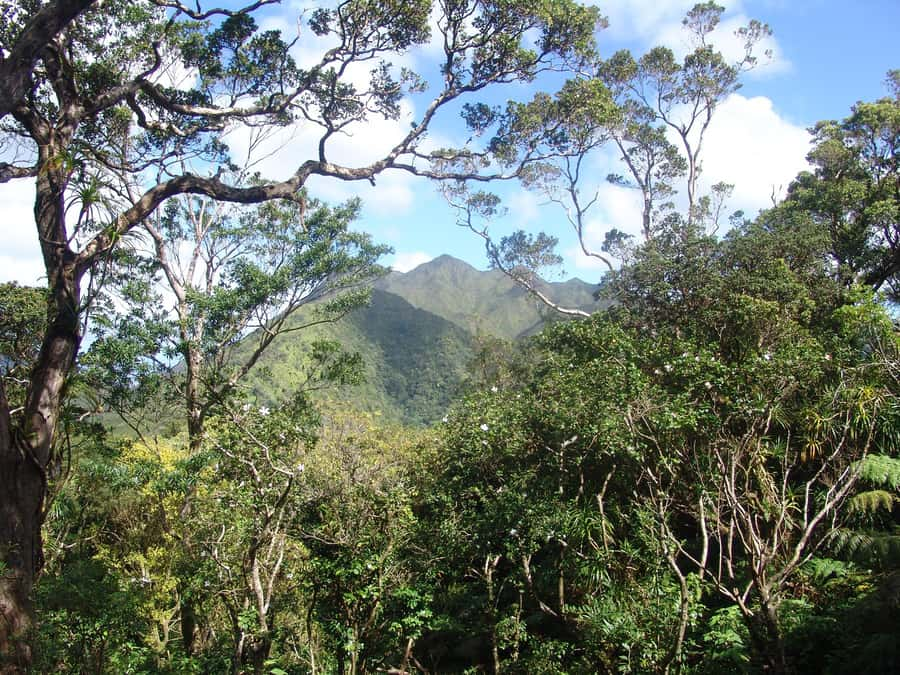
You’re in English with a live guide, and the role is more than keeping the group together. A good guide helps you notice. They point out what’s growing, how the forest functions, and how the mountain range views fit into the island’s layout.
The reviews highlight guides including Malki and Terry, both noted for being excellent and for explaining the area in a way that makes the hike feel worth it. If you’re deciding between a guided hike and a self-guided walk, this is one of the biggest reasons to choose guided.
You’ll get the history-and-habit angle without it becoming a lecture. The explanations are tied to what you’re seeing right then: plant features, mountain-line sightlines, and why certain directions matter for viewing.
One practical bonus: guides help with pacing. When your route involves elevation gain on uneven ground, having someone manage the rhythm can keep you from burning out early.
What’s included vs. what you should pack yourself
This tour is set up to handle the common discomforts of a rainforest hike:
- Rain gear
- a hip pack
- mosquito repellant
- round-trip transportation from Kahala, Waikiki, and Aloha Tower
That’s a big value point. Rain gear alone can save you from scrambling last minute, and repellant is smart in humid forest areas.
Still, bring these items:
- Hat
- Sunscreen
- Comfortable clothes
- Closed-toe shoes
I’d also suggest wearing quick-dry layers if you have them. Even if it isn’t pouring, tropical hikes can make you sweat. Comfort matters over time—especially once the incline starts.
Price and value: what $90 buys you in real life
At $90 per person, you’re paying for more than “a walk with views.” You’re paying for:
- a live nature guide in English
- the rainforest-specific gear support (rain gear, hip pack, repellant)
- round-trip transportation from multiple Waikiki-adjacent and downtown-friendly locations
- a guided hike with a structured timing window of about 3 hours
If you tried to copy this day on your own, the costs would pop up in different places: transport, gear, and the time spent figuring out where to go and what to look for. Even if you found a trail, you likely wouldn’t have someone pointing out native plant details and reading the skyline for Ko‘olau and O‘ahu’s high points.
So the value isn’t only the views. It’s the reduction of friction. You show up, they equip you, and you get a guided path that’s designed for both scenery and learning.
Who should book this hike (and who should skip it)
This is a family-friendly activity, and kids are welcome—but the limit is clear: not suitable for children under 8. That’s probably about stamina and footing needs on a wet hillside.
It’s also not suitable for people with mobility impairments. That’s important to take seriously when the terrain is uneven and traction matters.
If you like moderate hikes and you can handle elevation gain, you’ll likely enjoy the mix of forest time and viewpoint time. If you’re low on fitness or expecting a flat walk, you’ll feel stressed instead of relaxed.
Should you book the Honolulu Hawaiian Volcanic Rainforest Hike?
I’d book it if you want a guided mountain day with real nature context, not just a scenic photo stop. The big selling points for me are the native forest walk, the guide-led education, and the chance to see major O‘ahu landmarks like Honolulu, Waikiki, Pearl Harbor, Kailua, plus the Pacific—all from a volcano-slope hike.
Skip it if your idea of hiking is mostly flat terrain, or if you need something low-effort and fully accessible. This one asks for effort and sturdy shoes.
If you’re staying in Waikiki or close to Kahala, the included pickup also makes the day easier. In a place where time and logistics matter, that convenience can be the difference between doing it and never quite getting around to it.
FAQ
How long is the Honolulu Hawaiian Volcanic Rainforest Hike?
The tour duration is about 210 minutes, roughly 3 hours.
What views can I expect during the hike?
You may be able to see Honolulu, Waikiki, Pearl Harbor, Kailua, the Pacific Ocean, and Le’ahi (Diamond Head) volcano crater from distant scenic viewpoints.
How difficult is the hike?
It’s described as a moderate hike with about 600 feet of elevation gain. An above-average fitness level is required, and sturdy shoes with good traction are recommended.
Is the tour family-friendly?
Kids are welcome, but it is not suitable for children under 8 years old.
What transportation is included?
Complimentary round-trip transportation is included from Kahala, Waikiki, and Aloha Tower.
What should I bring?
Bring a hat, sunscreen, comfortable clothes, and closed-toe shoes. Rain gear and mosquito repellant are provided.
Also on the Honolulu List
- Oahu Grand Circle Island and Haleiwa Tour: 9-Hr Deluxe Experience★ 5.0 · 17,387 reviews
- Oahu: Grand Tour Around Island 16 Locations plus Snorkeling★ 5.0 · 8,669 reviews
- Salute to Pearl Harbor Including USS Arizona★ 4.5 · 7,433 reviews
- Majestic Circle Island Tour with Lunch★ 5.0 · 7,014 reviews
Trails Above the City
- Self guided Hike Trail to Nature Walk & Waterfall★ 4.5 · 283 reviews
- Manoa Falls Rainforest & Self-Guided Hike★ 4.5 · 227 reviews
- Diamond Head Hike Shuttle with Reservation Tickets Included★ 5.0 · 223 reviews
- Manoa Waterfall Hike with Waikiki Pickup & Healthy Lunch★ 4.5 · 185 reviews
Into the Back of Manoa Valley
- Tour of North Shore & Waimea Waterfall★ 5.0 · 3,682 reviews
- All Inclusive Ultimate Circle Island Tour, Waimea Falls & Lunch★ 5.0 · 3,067 reviews
- Byodo In Temple, Waimea Botanical Garden-Waterfall: Includes Fees★ 5.0 · 291 reviews
- Self guided Hike Trail to Nature Walk & Waterfall★ 4.5 · 283 reviews
The Latest from Kalakaua Avenue and Beyond



Manoa Falls & Rainforest Hikes, compared.
 ★ 5.0Tour of North Shore & Waimea WaterfallFrom $1543,682 reviews
 ★ 5.0All Inclusive Ultimate Circle Island Tour, Waimea Falls & LunchFrom $1563,067 reviews
 ★ 5.0Byodo In Temple, Waimea Botanical Garden-Waterfall: Includes FeesFrom $164291 reviews
 ★ 4.5Self guided Hike Trail to Nature Walk & WaterfallFrom $79283 reviews
 ★ 4.5Manoa Falls Rainforest & Self-Guided HikeFrom $52227 reviews
 ★ 4.5Manoa Waterfall Hike with Waikiki Pickup & Healthy LunchFrom $107185 reviews
 ★ 5.0North Shore / Waimea, Falls Day & Swim with TurtlesFrom $150106 reviews
 ★ 5.0Private Bucket List Adventure Day- Hikes, Beaches, WaterfallsFrom $22548 reviews
Browse the lists this tour appears in