
REVIEW · CIRCLE ISLAND DAYS FROM WAIKIKI
Oahu Circle Island Tour
A full day, many views, and zero rental car. What makes this Oahu Circle Island tour work is the air-conditioned comfort on the road plus the small-group size that keeps the day personal instead of chaotic. You get big-picture geography too: Waikiki area out, then temples, blowholes, surf beaches, and the North Shore.
I especially like that the stops are built around real local texture, not just pull-off points. Still, the main catch is time: it’s a long day, with short photo breaks and a couple places that have day-of-week rules, like Hanauma Bay being closed Monday and Tuesday.
In This Review
- Quick hits before you go
- Circle Island in One Day: what this 9-hour route really feels like
- Price and value: what $149 covers (and what you still pay for)
- Pickup and getting to the van: your morning checklist
- Diamond Head side stop: Amelia Earhart’s Marker and the surf below
- Kahala Avenue: see the quiet wealth of Oahu (and why it’s useful)
- Hanauma Bay Nature Preserve: snorkeling country with rules
- Halona Blowhole: volcano geology in action
- Sandy Beach and the Pele legend: surf energy, bodysurf spots, and reef reality
- Byodo-in Temple in the Valley of the Temples: a calm reset
- Tropical Farms macadamias: why the snack stop is actually part of the tour
- Kualoa Ranch: movie sets, cattle ranch, and real acreage
- Kahuku Farms fruit stand: quick bites with a local-food vibe
- North Shore lunch time in Kahuku: plan for your own meal
- Surfers’ spotlight: Banzai Pipeline at the North Shore
- Sharks Cove: sea life habitat where rocks shape the swim
- Dole Plantation: your 60 minutes of pineapple payoff
- The guide factor: why the best part isn’t just the scenery
- What can go wrong (and how to protect your day)
- Who this tour suits best (and who should skip it)
- Should you book this Oahu Circle Island tour?
- FAQ
- What time does the Oahu Circle Island tour start?
- Is pickup included, and where do you pick me up?
- How long is the tour?
- How many people are in the group?
- Are admissions included for stops like Hanauma Bay and Byodo-in Temple?
- Is Hanauma Bay open every day?
- Can the tour accommodate wheelchairs or scooters?
Quick hits before you go
- Professional local guiding with real storytelling keeps the drive from feeling like time filler
- Small group (max 24) means you can actually hear directions and ask questions
- Hanauma Bay includes admission, and it’s one of the few places on Oahu where you can see conservation-first marine life
- North Shore stops cluster together, so you don’t lose half the day just getting there
- Macadamia, coffee, and fruit stands turn “snack breaks” into mini culture lessons
- Good weather matters, since the tour runs as a full circuit of outdoor scenery
Circle Island in One Day: what this 9-hour route really feels like
Think of this as a full visual sweep of Oahu, timed for first-time orientation. You start early (8:00am) and move steadily from the Diamond Head side into the windward and North Shore areas, then loop back toward Honolulu with a final big-name stop.
It’s not a slow-and-sit tour. Most stops are 15 to 30 minutes, which means you’re there for the view, the quick look around, and the guided context. If you like stretching every stop into a half-day, you’ll likely feel rushed.
Price and value: what $149 covers (and what you still pay for)
At $149 per person, the value comes from two things: included entry for key sites and the cost you avoid by skipping a rental car. Multiple stops list admission as free or included (for example Hanauma Bay and Byodo-in Temple), which helps the day feel more like a packaged experience than a set of separate tickets.
You’ll still want spending money for food and souvenirs. The tour explicitly notes bring cash or credit for meals and shopping, and the route includes lunch time plus several farm stands where purchases are part of the fun.
Other full loops around the island, lunch stops included
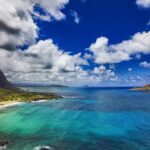

Pickup and getting to the van: your morning checklist
Pickup is offered, but it’s not blanket coverage for every hotel. In Waikiki, there are designated pickup zones, and you’ll get a text or email one day before with your pickup time and location.
This matters because it affects how early you need to leave your room. Give yourself buffer time for waiting, restroom stops, and that last-minute grab of water and sunscreen. Also remember you’re signing up for a 9–10 hour day including travel time, so plan your day around it.
Diamond Head side stop: Amelia Earhart’s Marker and the surf below
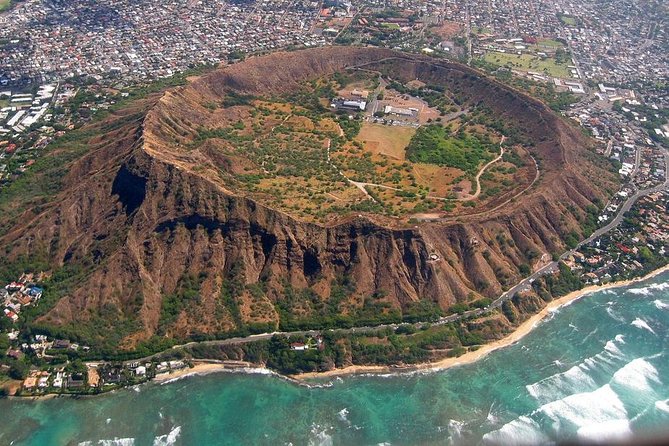
The morning starts with a viewpoint near Diamond Head State Monument: Amelia Earhart’s Marker. The lookout overlooks clear blue water, and the story tied to Amelia’s reputation as the first person to solo fly from Hawaii to North America gives the view extra weight.
The practical payoff: you’re high enough to see the coastline and the activity on the water. One minute you’re listening to history; the next you’re scanning the waves below like a naturalist with a camera.
Possible drawback: lookout time is short (about 15 minutes). If you want a long sit-down photo session, arrive ready to move fast and grab your angles early.
Kahala Avenue: see the quiet wealth of Oahu (and why it’s useful)
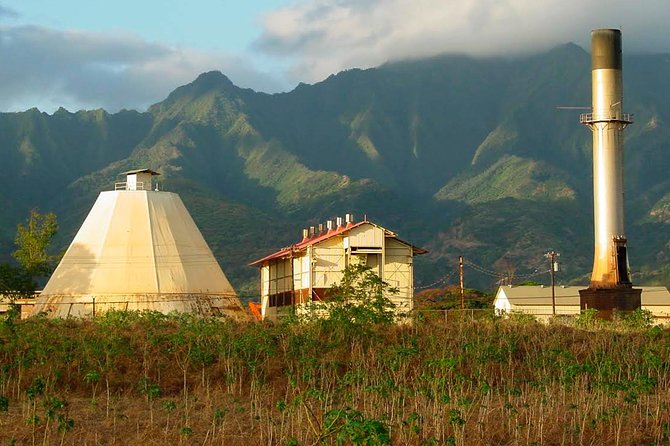
Next is Kahala Avenue, Honolulu’s prestigious beachfront neighborhood. You’ll get a real sense of how the island looks when it’s not just beach access and tourist traffic—think homes ranging from older villas to contemporary builds, with a pristine sandy beach right there.
Why this stop is worth it: it helps you understand the geography of where power, property, and scenery meet. It’s a useful contrast after the earlier viewpoint, and it’s a calmer “window” into Honolulu than the busier areas.
- Oahu Grand Circle Island and Haleiwa Tour: 9-Hr Deluxe Experience
★ 5.0 · 17,387 reviews - Oahu: Grand Tour Around Island 16 Locations plus Snorkeling
★ 5.0 · 8,669 reviews - Salute to Pearl Harbor Including USS Arizona
★ 4.5 · 7,433 reviews - Majestic Circle Island Tour with Lunch
★ 5.0 · 7,014 reviews
Hanauma Bay Nature Preserve: snorkeling country with rules
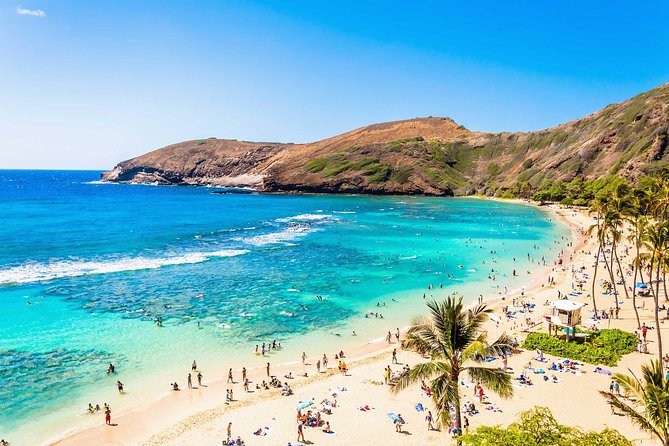
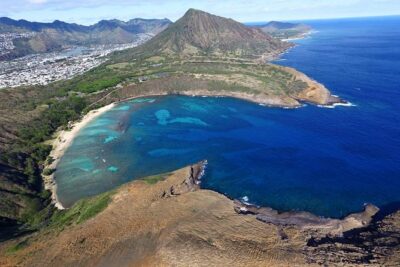
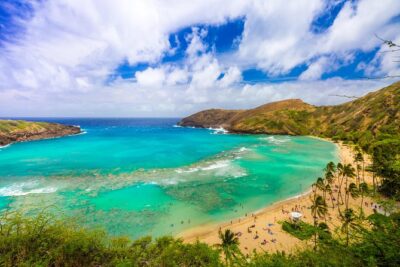
Hanauma Bay Nature Preserve is a protected marine life conservation area shaped within a volcanic cone. It’s known as a major snorkeling spot, with vibrant marine life and well-preserved corals—so this is the tour stop that feels the most nature-and-conservation focused.
Admission is included, which is a big deal because it removes one more variable from your day. The time slot is also short (around 15 minutes listed), so if you’re planning to snorkel, you’ll want to treat this stop as structured, not casual wandering.
Important consideration: Hanauma Bay is closed on Monday and Tuesday. If your trip lands on those days, you may need to accept that the day’s flow changes.
Halona Blowhole: volcano geology in action
Halona Blowhole is one of those “you don’t need explanations, but you do want them” stops. It’s a natural wonder formed thousands of years ago from volcanic lava tubes created by eruptions, and the view from the lookout point is the star.
This is the kind of stop that works even if the ocean is behaving normally, because the geology is still impressive. When the water is active, the blowhole area adds drama and sound.
Time is about 20 minutes. Use it to watch the coastline first, then start your photos once you see the pattern of the waves.
Sandy Beach and the Pele legend: surf energy, bodysurf spots, and reef reality
After the blowhole, you’ll see Sandy Beach, located at the base of Koko Crater (also known by the Hawaiian name Kohelepelepe). You also get a mythic layer through the legend of Pele and Kamapua’a, which turns a surf beach into a story-bearing place.
This stop is more than scenery. Sandy has multiple popular bodysurfing and bodyboarding areas (Pipe Littles and Half Point), plus board surfing at Full Point near the offshore reef. Winter conditions can bring dangerous shallow-reef swells, and the route notes that you should check with the lifeguard for the latest conditions before going in.
Practical tip for your planning: even if you’re not surfing, this is a great place to watch how quickly the water changes from calm to chaotic.
Byodo-in Temple in the Valley of the Temples: a calm reset
The Byodo-in Temple is at the foot of the Ko’olau Mountains in Valley of the Temples Memorial Park. It was established on June 7, 1968, to commemorate the 100-year anniversary of the first Japanese immigrants to Hawaii, and it’s a smaller-scale replica of the Byodo-in Temple in Uji, Japan.
This stop gives you a different kind of Oahu: less ocean drama, more cultural quiet and a sense of place. Admission is included, and the time on-site is about 30 minutes, enough for a slow walk and a few photos without feeling rushed.
Tropical Farms macadamias: why the snack stop is actually part of the tour
At Tropical Farms Macadamia Nuts, you’re in a roadside operation that began in 1987. The shop is described as tucked away off the beaten path, and the experience includes free coffee and macadamia samples—plus a hands-on moment where you crack a macadamia nut from a tree behind the shop.
This is one of those stops that works well for different travel styles. If you love food, it’s a treat. If you don’t, it’s still a window into how the North Shore turns agriculture into approachable visitor experiences.
Kualoa Ranch: movie sets, cattle ranch, and real acreage
Kualoa Ranch is a 4,000-acre private working cattle ranch and one of Oahu’s historic places. It has been the scene for lots of Hollywood movies and television shows, so you’ll likely recognize the look even if you can’t place the title.
The practical angle here: Kualoa is outdoor Oahu without being a theme park. It gives you a sense of scale—how big the ranch is, how it faces Kaneohe Bay, and how the landscape supports active farming.
Kahuku Farms fruit stand: quick bites with a local-food vibe
Next is Kahuku Farms, known for fruit stands and quick, grab-and-go flavors. The stand sells fresh fruit that’s already cut and bagged in ziplock, plus favorites like banana lumpia and coconut water.
This stop is ideal if you want a “taste the region” moment without spending time hunting for a proper meal. The listed time is about 20 minutes, so come hungry or at least ready to snack.
North Shore lunch time in Kahuku: plan for your own meal
There’s a North Shore lunch stop in Kahuku farms with about an hour allocated. The tour notes to let your driver know if you’re vegan or vegetarian, which is a useful heads-up so you don’t get stuck at the wrong counter or with the wrong expectations.
What’s not stated is that lunch is automatically included in the price. So treat this as your meal-buying window: bring cash or card and keep it flexible.
Surfers’ spotlight: Banzai Pipeline at the North Shore
One of the most famous surf breaks on the North Shore is Banzai Pipeline, also called a “Banzai Pipeline” for its barreling waves. In winter, massive swells break on shallow reef and the beach becomes dangerous—built for only the best and bravest surfers. In summer, the water is calmer, but you should still check with the lifeguard for conditions before going in.
Even if you don’t swim, this is a top-tier viewpoint stop. The wave choreography is the show, and the setting helps you understand why this area has so much international attention.
Sharks Cove: sea life habitat where rocks shape the swim
The tour then heads to Sharks Cove, one of the best-known snorkel and scuba areas on the North Shore. It’s part of Pupukea Beach Park and is described as a small rocky bay with blue water and lots of sea life.
The underwater geography is the key detail: the bottom is made up of large smooth boulders and coral heads that form small caves and ledges. That’s exactly what tends to create natural hideouts for marine life.
Consideration for your comfort: rocky bays can mean splashy entry points and uneven footing. If you’re bringing gear, bring something you can manage confidently on the rocks.
Dole Plantation: your 60 minutes of pineapple payoff
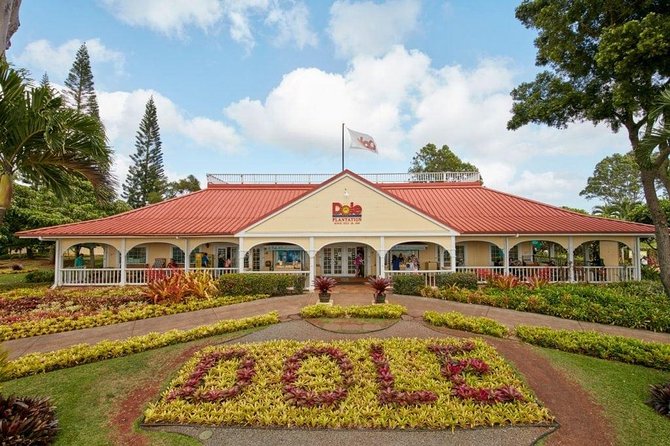
The day ends with Dole Plantation, founded in 1901 and opened to the public as Hawaii’s Pineapple Experience in 1989. You’ll want to plan your time because it’s listed as about 1 hour—enough for the signature treats and a quick sweep, not a full deep stay.
The big draw points are the plantation store and pineapple products like pineapple ice cream and Dole Whip. If you’re buying gifts, this is your easiest “one stop, many items” moment.
The guide factor: why the best part isn’t just the scenery
This kind of tour rises or falls on the guide. The route is packed with viewpoints and short windows, so you need someone who can explain what you’re seeing and keep the day moving.
In the feedback you’ll find lots of praise for guides with strong personalities and good pacing—names like Ian, Chuck, Hema, and Ro-Ro show up tied to storytelling and keeping groups together. One repeated theme: the guide helps you time your photos, points out what matters fast, and handles driving around Honolulu traffic better than a solo attempt would.
What can go wrong (and how to protect your day)
A packed circle route has a few built-in risks. Some stops depend on day-of-week operations (Hanauma Bay is closed Monday and Tuesday), and ocean conditions can affect how comfortable it is to go near the water.
Also, because this is a full-day circuit, you’re counting on weather. The tour requires good weather, and if it can’t run safely, you should expect a date change or refund options.
My practical advice: go in with a flexible mindset. If a stop gets shortened or rerouted by conditions, you’ll still get the big picture of the island and plenty of standout viewpoints.
Who this tour suits best (and who should skip it)
This tour is a great match if you’re:
- Trying to get your bearings on Oahu fast
- Short on time and want North Shore scenery without driving yourself
- Interested in a mix of coastline, temples, and local farms in one go
It may be less ideal if you want:
- Long time at a single beach or museum
- A slow, unhurried pace with no rushing between stops
- Guaranteed snorkeling or swimming plans regardless of conditions
Should you book this Oahu Circle Island tour?
If you want an efficient Oahu highlight reel with included admission at key stops and the convenience of A/C transport, this one is worth serious consideration. At $149, it’s priced like a practical day tour, not a bargain—but the included entries and the “avoid the rental car” value can make it feel fair.
My final call: book it if you like structured sightseeing and you can handle a long day. If your must-do depends on Hanauma Bay being open that exact day, double-check your travel calendar first.
FAQ
What time does the Oahu Circle Island tour start?
The tour start time is listed as 8:00am.
Is pickup included, and where do you pick me up?
Pickup is offered, but not all hotels are included. There are designated pickup zones in Waikiki, and you’ll receive a text or email with your pickup time and location one day prior (between 12pm and 5pm local time).
How long is the tour?
The duration is approximately 9 hours, and the tour notes 9 to 10 hours including travel time.
How many people are in the group?
The tour has a maximum of 24 travelers.
Are admissions included for stops like Hanauma Bay and Byodo-in Temple?
Yes for key stops. Hanauma Bay Nature Preserve and Byodo-in Temple list admission as included, and several other stops show admission ticket free.
Is Hanauma Bay open every day?
No. Hanauma Bay Nature Preserve is closed on Monday and Tuesday.
Can the tour accommodate wheelchairs or scooters?
Not all tour vehicles can accommodate mobility devices such as wheelchairs and scooters. The information says to call right away after you book to make arrangements.
Also on the Honolulu List
- Oahu Grand Circle Island and Haleiwa Tour: 9-Hr Deluxe Experience★ 5.0 · 17,387 reviews
- Oahu: Grand Tour Around Island 16 Locations plus Snorkeling★ 5.0 · 8,669 reviews
- Salute to Pearl Harbor Including USS Arizona★ 4.5 · 7,433 reviews
- Majestic Circle Island Tour with Lunch★ 5.0 · 7,014 reviews
Around the Island and Back by Dinner
- Oahu Grand Circle Island and Haleiwa Tour: 9-Hr Deluxe Experience★ 5.0 · 17,387 reviews
- Oahu: Grand Tour Around Island 16 Locations plus Snorkeling★ 5.0 · 8,669 reviews
- Majestic Circle Island Tour with Lunch★ 5.0 · 7,014 reviews
- Oahu Circle Island Tour with Turtle Snorkeling— Small-Groups★ 5.0 · 5,214 reviews
The Latest from Kalakaua Avenue and Beyond


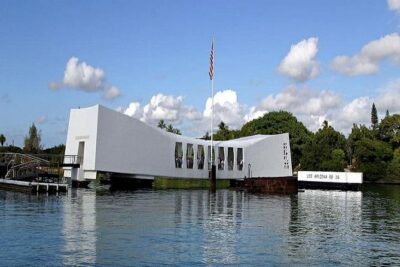
Circle Island Days from Waikiki, compared.
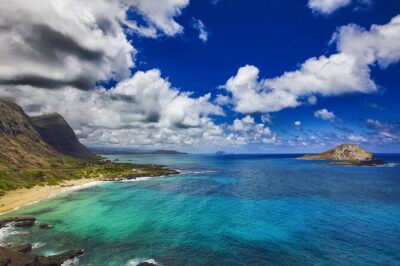 ★ 5.0Grand Tour Around Island 16 Locations plus SnorkelingFrom $1098,669 reviews
 ★ 5.0Majestic Circle Island Tour with LunchFrom $1817,014 reviews
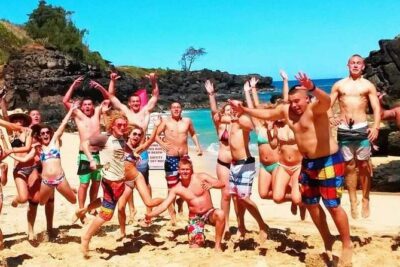 ★ 5.0Oahu Circle Island Tour with Turtle Snorkeling— Small-GroupsFrom $1495,214 reviews
 ★ 5.0All Inclusive Ultimate Circle Island Tour, Waimea Falls & LunchFrom $1563,067 reviews
 ★ 5.0Oahu Grand Circle Island Experience from WaikikiFrom $992,317 reviews
 ★ 4.5Oahu Deluxe Grand Circle Island TourFrom $1452,123 reviews
 ★ 5.0Premium Oahu Circle Island Tour – Small Group, No CrowdsFrom $1151,709 reviews
 ★ 4.5Sights & Bites Ultimate Oahu Circle Island Foodie Tour492 reviews
Browse the lists this tour appears in