REVIEW · SURF LESSONS ON WAIKIKI BEACH
Oahu: Surf Lesson
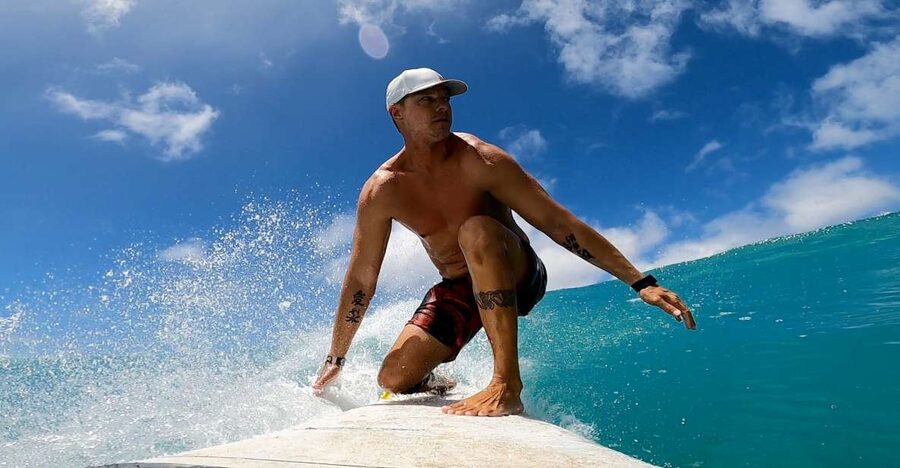
Oahu surfing, minus the Waikiki crush. This 90-minute lesson takes place at the North End of Ala Moana Beach Park and is designed for hands-on learning in a small group. What I like most is the GoPro cameras for instant surf memories, and the 2-to-1 instructor ratio that keeps the coaching personal.
The main thing to consider is fit: it runs rain or shine, and it’s not suitable for non-swimmers, people with low fitness, or anyone outside the limits listed by the operator.
In This Review
- Key things to know before you go
- Why Ala Moana’s North End Works for a Beginner Lesson
- Meeting Point and What Happens Before You Hit the Water
- On the Beach: The Basics That Actually Transfer to Standing Up
- Your One-Hour Surf Session: How the Coaching Gets You Riding
- GoPro Cameras: Why the Footage Feels Like Part of the Lesson
- The Instructor Experience: Clear Teaching, Practical Corrections
- Price and Value: Does $125 Make Sense?
- Who This Oahu Surf Lesson Suits Best
- How to Prepare So You Get the Most Out of 90 Minutes
- Should You Book This Oahu Surf Lesson?
Key things to know before you go
- North End Ala Moana meeting point keeps you away from the most crowded Waikiki energy
- 2-to-1 instructor support helps beginners get corrections fast
- Gear is included: board, leash, rashguard, reef shoes, and GoPro cameras
- Beach review first so you practice paddling and standing basics before water time
- About one hour on the waves during the 90-minute experience
- Rain or shine means you should plan for wet, not optional, conditions
Why Ala Moana’s North End Works for a Beginner Lesson
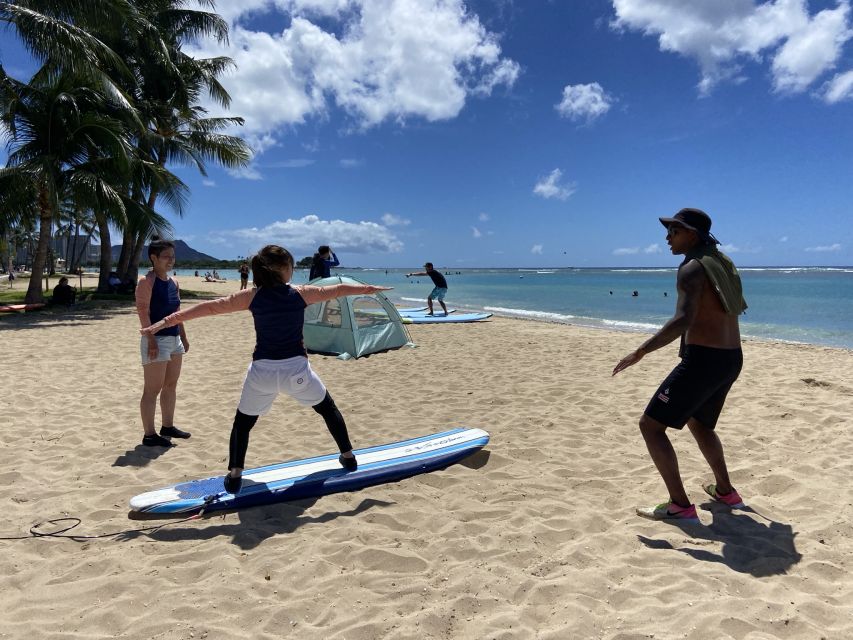
If you’re new to surfing, your biggest enemy is confusion. Not just the waves, but also the chaos around you. This lesson targets the North End of Ala Moana Beach Park, so you’re learning in a more controlled setting than the thick tourist lanes closer to Waikiki.
You also get a sweet format for beginners: instruction on the beach, then real attempts in the water. That pacing matters. If you start in the ocean without prep, you spend your time guessing. Here, you start by rehearsing the fundamentals—paddling and standing—so your first attempts actually have a plan behind them.
Meeting Point and What Happens Before You Hit the Water
You meet at the North End of Ala Moana Beach Park by the volleyball courts and showers. It’s an easy landmark setup, and it helps you arrive calm instead of hunting for a guide.
Once you’re there, the experience is set up to move efficiently. You’ll be outfitted with the surf essentials (surfboard, leash, rashguard, and reef shoes are included), and you’ll get the core safety guidance before you’re in the lineup. That’s important on any Hawaii shoreline: you want to understand where to place yourself and how to move around the water safely, not just how to stand.
The group stays small—limited to 5 participants—and the instructor ratio is 2 students per instructor. For a beginner, that’s the difference between vague tips and quick, specific corrections.
More instructors working the Waikiki rollers


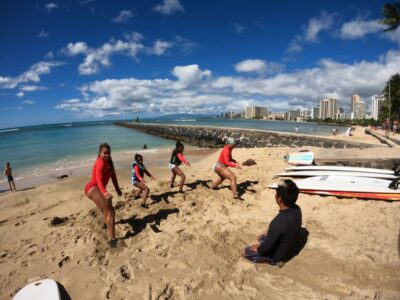
On the Beach: The Basics That Actually Transfer to Standing Up
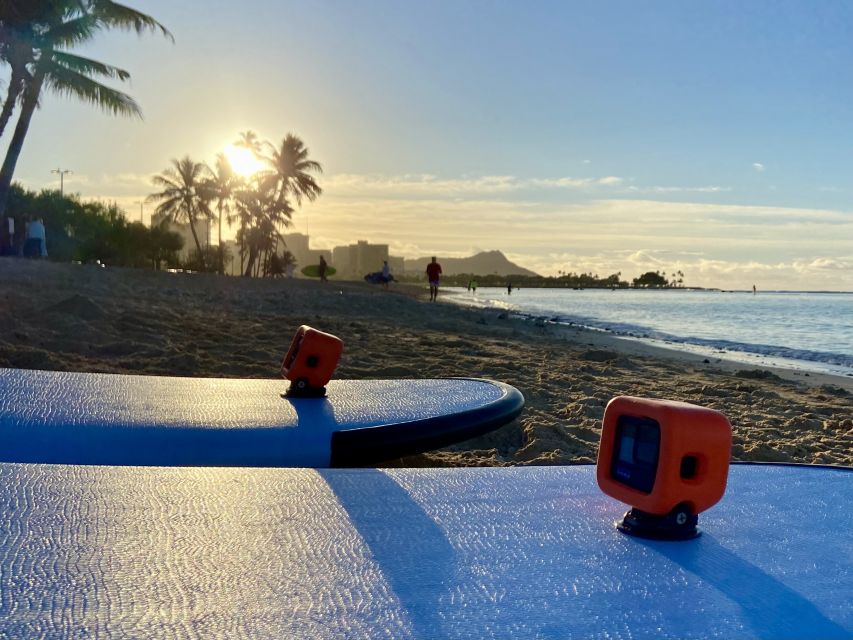
Before you surf, you’ll do a beach review of key surfing basics. This is where you build the muscle memory you’ll need later when you’re out there and the water feels louder than your thoughts.
Here are the specific skills the lesson focuses on:
- Paddling: You learn the proper way to paddle efficiently so you can get into position. This is huge for beginners because most people waste energy and don’t arrive where they need to be.
- Standing up: You practice foot placement and balance. The goal isn’t perfection. The goal is to stop guessing in the moment and start using a repeatable sequence.
- Water safety: You’ll cover essential safety tips, including how to navigate waves and respect the ocean.
This beach-to-water structure is one of the best parts of the experience. It compresses learning time. Instead of “watch, then hope,” you get the steps first, then you try them immediately.
Your One-Hour Surf Session: How the Coaching Gets You Riding
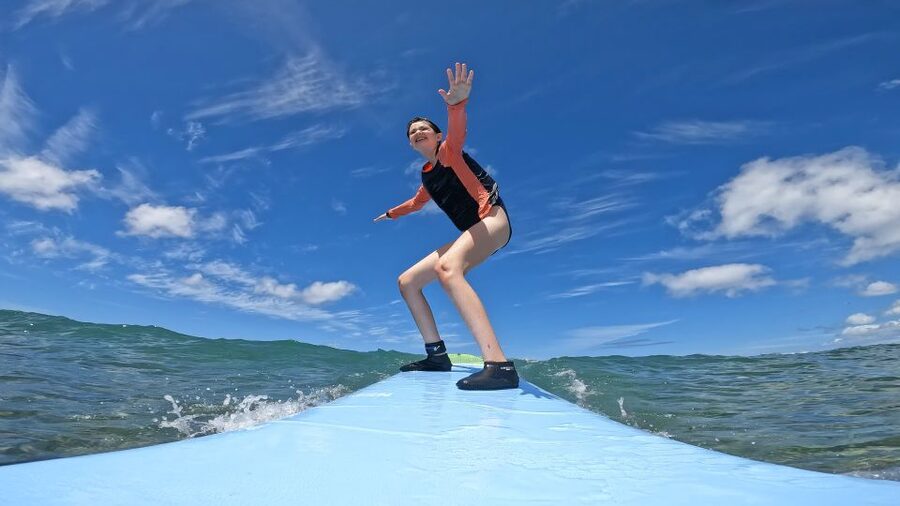
After the beach prep, you hit the waves for about an hour of surfing practice. That time matters. One hour is long enough to feel the rhythm of the ocean and short enough that you’re not exhausted before you’ve had meaningful tries.
During this session, the coach helps you apply what you practiced:
- Getting into position using the paddling technique
- Trying the stand using the foot placement and balance cues you worked on on shore
- Making adjustments based on what’s happening in the water in real time
The small-group setup helps here. With a 2-to-1 student-to-instructor ratio, you’re not stuck waiting your turn while someone else gets all the attention. You’re more likely to get immediate feedback, which speeds up progress.
Also, there’s a mental benefit to this format. You can stay focused on the task at hand—paddle, position, stand—without getting overwhelmed by the whole experience at once.
GoPro Cameras: Why the Footage Feels Like Part of the Lesson
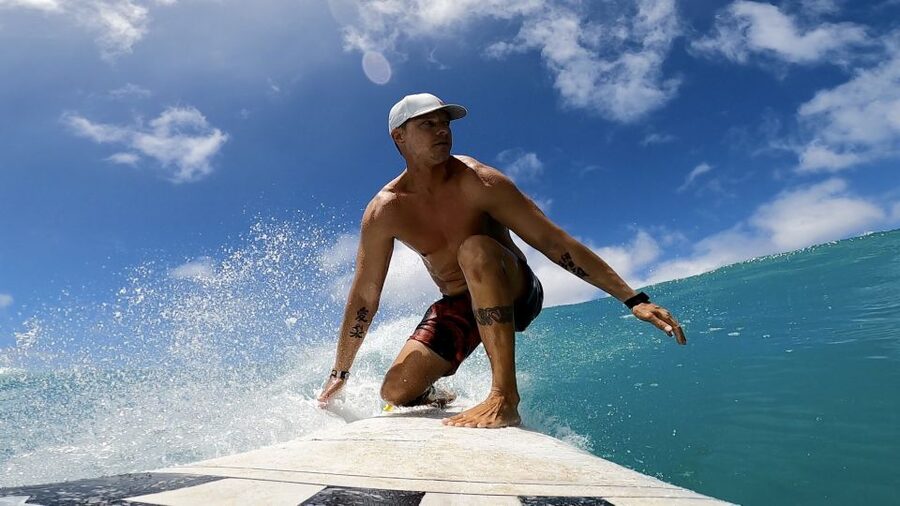
One of the most praised parts of this surf experience is the video. You get GoPro cameras to capture your time in the water, so you can relive the moment your brain finally figures out what your body is doing.
Why that matters for beginners: surfing is one of those sports where the feeling during the ride can vanish fast. Video turns it into a learning tool. You can also share it with friends and family without needing to explain what you did and where you were.
You don’t need to be a “tech person” either. The value is simple: you walk away with footage, not just memories and a few blurry photos.
If you care about capturing the whole arc—from shaky first attempts to cleaner rides—that GoPro component is a big win.
Learn something with sand still on your feet
- Private Surf Lessons in Honolulu
★ 5.0 · 76 reviews - Waikiki Beach: Surf Lessons
★ 4.9 · 73 reviews - Oahu: Waikiki Beginner Private Surf Lesson- Female Guide
★ 4.9 · 40 reviews - Waikiki: Surf Lessons Easy 60 min classes no crowds!
★ 4.9 · 21 reviews
The Instructor Experience: Clear Teaching, Practical Corrections
The lesson is guided by an instructor who speaks Japanese, Korean, and English. That language support helps you understand safety rules and technique cues without translating in your head.
One review specifically highlighted an instructor named John for being very helpful and knowledgeable in how he coached beginners. That’s exactly what you want in a first surf lesson: someone who can explain the why, but still keep it practical.
In practice, good instruction here shows up in small things:
- You get corrected on paddling and stance early
- You’re guided on where to go in the water
- You’re encouraged to keep trying, but with clearer next steps each time
For first-timers, that combination—support plus actionable feedback—is what turns “I tried once” into “I learned something.”
Price and Value: Does $125 Make Sense?
At $125 per person for 90 minutes, you’re paying for more than a board rental. You’re paying for coaching, safety instruction, and all the gear that usually adds up fast if you had to assemble it yourself.
Included items are a big part of the value:
- Surfboards and leashes
- Rashguards and reef shoes
- GoPro cameras for video capture
That’s the practical side. The other side is time: beach review plus roughly one hour actually surfing means you’re not wasting the session just getting ready. And with a small group capped at 5, you’re less likely to feel like you’re paying for crowd noise instead of instruction.
If you’re the kind of visitor who wants a real activity outcome—standing up basics, safety guidance, and a video record—this price can feel fair. If you’re mainly looking for a casual beach walk or a photo session with zero instruction, you might want a different kind of experience.
Who This Oahu Surf Lesson Suits Best
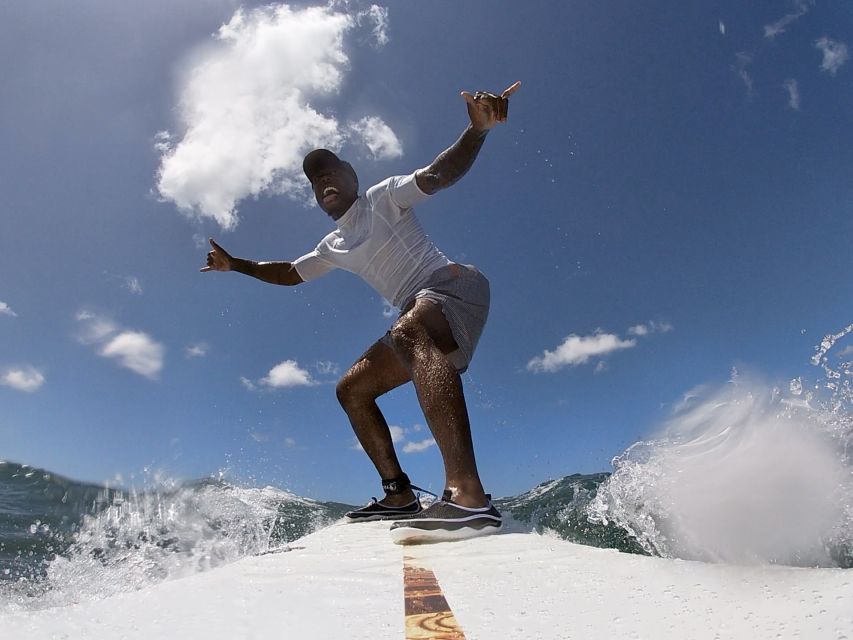
This is designed for beginners and people who want to refine basics. It’s also a straightforward fit if you:
- Can swim confidently
- Are in a reasonable fitness range for active water time
- Want a structured lesson with a personal coach-to-student feel
It is not suitable for:
- Children under 10
- Pregnant women
- People with mobility impairments
- Non-swimmers
- People prone to seasickness
- People over 230 lbs (104 kg)
- People with low level of fitness
That list is not “fine print.” It’s a signal that the activity depends on being able to get into the water and handle the physical demands of paddling and balancing repeatedly.
How to Prepare So You Get the Most Out of 90 Minutes
Because the experience runs rain or shine, I’d plan like you’re going to get wet. Bring a simple mindset: you’re there to learn and practice, not to stay dry.
A good prep approach:
- Wear comfortable clothing you can change out of quickly
- Stay warm and hydrated before you start, since you’ll be active in the ocean
- Focus on technique cues over perfection. Surfing rewards consistency
Also, go in with realistic expectations. Even with a strong coach and a small ratio, you’re learning a sport on uneven water. The win is progress you can see in your own attempts—and the GoPro helps you track that.
Should You Book This Oahu Surf Lesson?
Book it if you want a beginner-friendly, structured surf session on Oahu that prioritizes coaching and gives you footage to remember it. The combination of a small group (limited to 5), a 2-to-1 coaching setup, and GoPro cameras makes this feel built for first-timers who want a real outcome—not just a casual try.
Skip it if you’re outside the listed safety and fitness needs, or if you want something more relaxed and observational. This is a hands-on lesson, and it moves at the pace required to teach paddling, standing, and water safety effectively.
If you’re ready to learn the fundamentals in Hawaii’s ocean instead of just watching from the shore, this one is a strong pick.
Hands-On Hours in Honolulu
- Private Surf Lessons in Honolulu★ 5.0 · 76 reviews
- Waikiki Beach: Surf Lessons★ 4.9 · 73 reviews
- Oahu: Waikiki Beginner Private Surf Lesson- Female Guide★ 4.9 · 40 reviews
- Waikiki: Surf Lessons Easy 60 min classes no crowds!★ 4.9 · 21 reviews
Also on the Honolulu List
- Oahu Grand Circle Island and Haleiwa Tour: 9-Hr Deluxe Experience★ 5.0 · 17,387 reviews
- Oahu: Grand Tour Around Island 16 Locations plus Snorkeling★ 5.0 · 8,669 reviews
- Salute to Pearl Harbor Including USS Arizona★ 4.5 · 7,433 reviews
- Majestic Circle Island Tour with Lunch★ 5.0 · 7,014 reviews
Where Surfing Gets Learned
- Kayak, Snorkel, and Surf with Turtles in Honolulu★ 5.0 · 95 reviews
- Private Surf Lessons in Honolulu★ 5.0 · 76 reviews
- Waikiki Beach: Surf Lessons★ 4.9 · 73 reviews
- Oahu: Waikiki Beginner Private Surf Lesson- Female Guide★ 4.9 · 40 reviews
The Latest from Kalakaua Avenue and Beyond

Surf Lessons on Waikiki Beach, compared.
 ★ 5.0Kayak, Snorkel, and Surf with Turtles in HonoluluFrom $20095 reviews
 ★ 5.0Private Surf Lessons in HonoluluFrom $19976 reviews
 ★ 4.9Waikiki Beach: Surf LessonsFrom $11273 reviews
 ★ 4.9Waikiki Beginner Private Surf Lesson- Female GuideFrom $13540 reviews
 ★ 4.9Waikiki: Surf Lessons Easy 60 min classes no crowds!From $10021 reviews
 ★ 5.01-on-1 Surfing Lesson in WaikikiFrom $1785 reviews
 ★ 5.0Waikiki: Family, Private, and Group Surfing LessonsFrom $1104 reviews
Browse the lists this tour appears in