
REVIEW · PEARL HARBOR VISITS FROM HONOLULU
Passport to Pearl Harbor “Private”
Pearl Harbor hits harder with context. This private tour strings together the USS Arizona Memorial boat experience with the rest of the Pearl Harbor story, including USS Missouri and USS Bowfin, all with an in-person briefing that helps you make sense of what you’re seeing. I like that the pacing is built for a full day without feeling rushed, and I especially appreciate the way the guide keeps the group on track so the time flies. The main drawback is practical: you’ll be following a fixed schedule for an 8–9 hour day, and no bags are allowed once you arrive at Pearl Harbor.
The payoff is that you’re not just collecting photo stops. You’re walking through four different angles of the same turning point in history, plus two extra Oahu stops that broaden the day beyond the shoreline attack.
In This Review
- Key things to know before you go
- Entering the day: a 7:30am start and an 8–9 hour plan
- Pearl Harbor Historic Sites Visitor Center: start with meaning, not just names
- USS Arizona Memorial: the sobering moment with a boat ride included
- USS Bowfin Submarine Museum: the war story goes underwater
- Battleship Missouri Memorial: where surrender becomes a concrete scene
- Pearl Harbor Aviation Museum on Ford Island: hangars, aircraft, and targets
- Oahu’s royal residence and Punchbowl Crater: history beyond the harbor
- Price and value: is $500 per person a smart buy?
- Private pacing: why the guide makes the day feel short
- Practicalities you’ll want to plan for
- Should you book Passport to Pearl Harbor Private?
- FAQ
- What time does the tour start?
- Is pickup available from every hotel in Honolulu?
- Is the boat ride to the USS Arizona Memorial included?
- Which museums are included?
- How long is the tour?
- Can I bring bags to Pearl Harbor?
- Is this a private tour?
- Do you offer free cancellation?
- Is the tour vehicle able to accommodate wheelchairs or scooters?
Key things to know before you go
- Private group setup means only your party joins you, so your guide can adjust the pace to your questions.
- Boat ride to USS Arizona Memorial and the on-site exhibit time are included, which saves you the hassle of piecing it all together.
- Four core Pearl Harbor sites are covered: Visitor Center, National Memorial, USS Bowfin, and USS Missouri.
- Aviation Museum on Ford Island includes admission to the hangars and aircraft exhibits (Hangar 37, Hangar 79, plus the Raytheon Pavilion).
- Oahu add-ons round out the day with a royal residence site and the Punchbowl Crater memorial.
- Schedule sensitivity: the tour length is set, and the boat program can be affected by mechanical issues or safety conditions.
Entering the day: a 7:30am start and an 8–9 hour plan
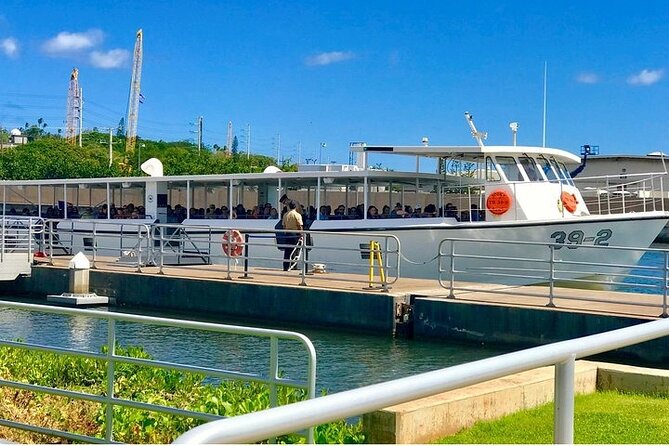
The tour runs about 8 to 9 hours, including travel time. You start at 7:30am, which is a smart move for Pearl Harbor days, because it helps you avoid the crush that often builds later.
Pickup is offered from select areas, mostly in Waikiki. You won’t be picked up from every hotel, so you should treat your confirmation and the follow-up text/email with pickup timing as the source of truth. One practical comfort here: you’re not managing traffic, parking, or multiple ticket lines. Your plan is already built.
Because this is a private experience, you also get a steadier flow. If you’re the type who likes to ask why something matters, this format tends to work well.
Pearl Harbor Historic Sites Visitor Center: start with meaning, not just names
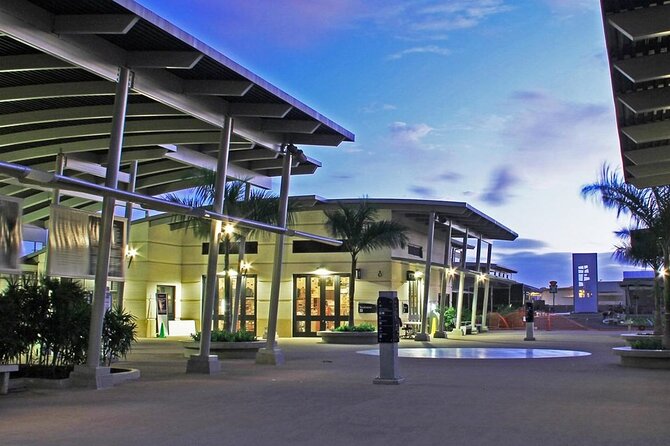
The day begins at the Pearl Harbor Historic Sites Visitor Center. This is your orientation stop, and that matters. The visitor center frames Pearl Harbor with local meaning, including the early Hawaiian references like Pu’uloa and Wai Momi. Even if you know the basic WWII facts, this stop gives you a clearer sense of place before you hit the memorials.
You get about 30 minutes here, plus an in-person briefing. That briefing is the difference between looking at artifacts and actually understanding what you’re looking at.
What I like about this stop is that it acts like a table of contents. It connects the dots between the attack, the war in the Pacific, and what comes later at the other memorials.
More ways to plan the Pearl Harbor morning
USS Arizona Memorial: the sobering moment with a boat ride included
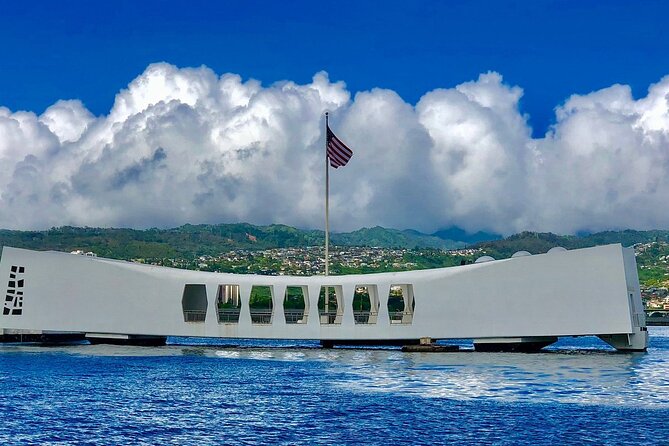
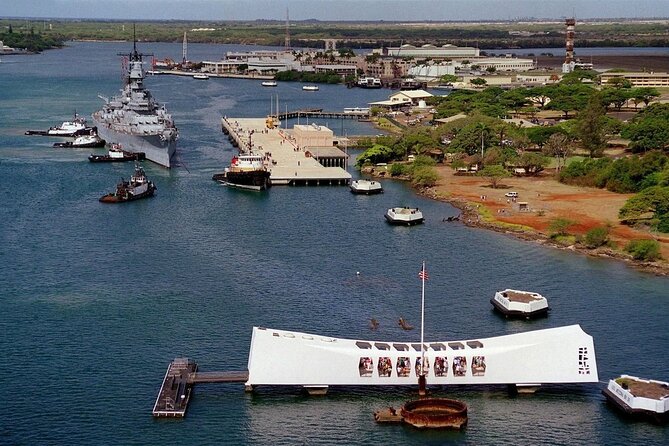
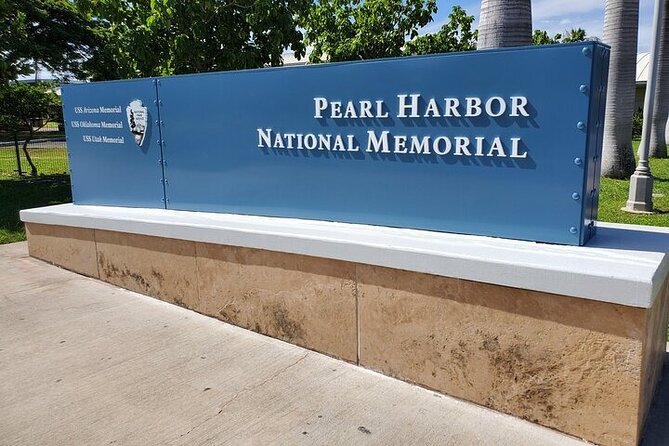
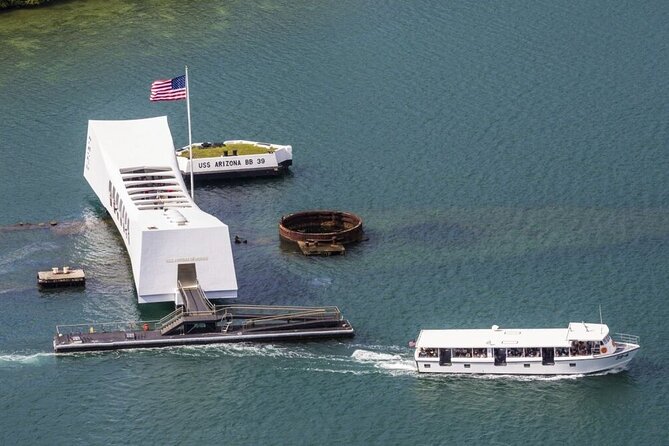
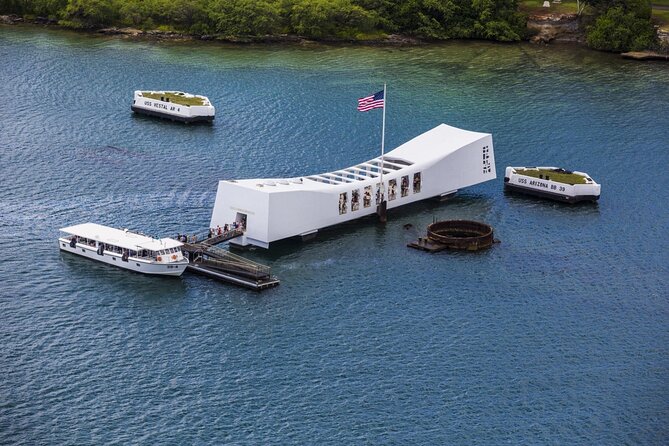
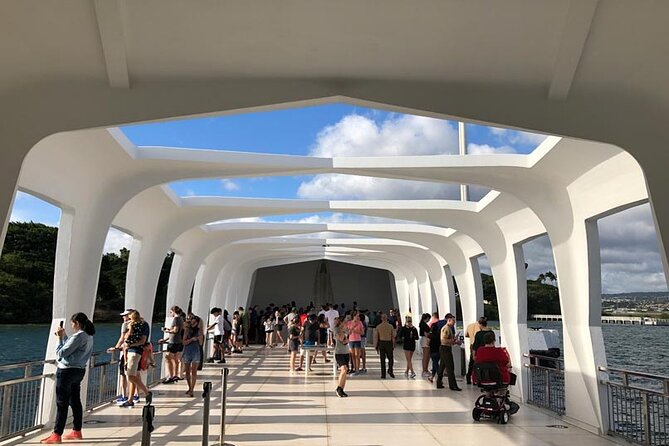
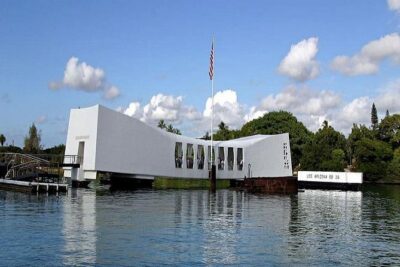
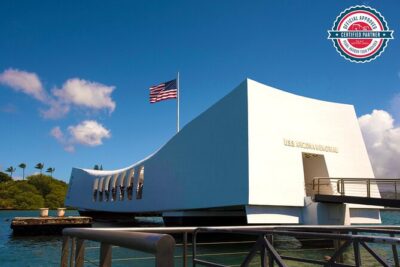
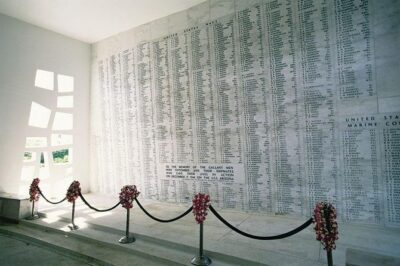
Next is the Pearl Harbor National Memorial, home to the USS Arizona Memorial. Expect about two hours here, including the boat ride to the memorial and time in the exhibit galleries.
There are two exhibit sections noted in the program: Road to War and Attack. These are not long “scrolling” displays; they’re structured to help you grasp the lead-up and the moment itself. The boat ride also plays a role in pacing. It gives you a pause built into the itinerary, so the memorial lands emotionally rather than just showing up as another stop.
This part of the day is where the feeling can get quiet. One reason this tour rates high is that the USS Arizona Memorial experience is hard to shake, even when you only have a set amount of time. If your goal is to leave with a memory that stays, this is that moment.
One consideration: your time here is fixed. You’ll want to be ready to absorb a lot in a short window.
USS Bowfin Submarine Museum: the war story goes underwater
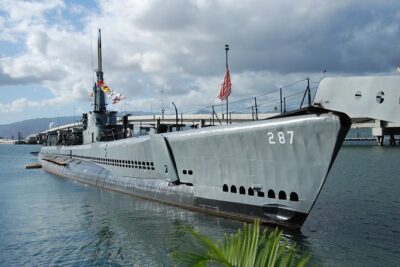
After the memorial, the itinerary moves to the USS Bowfin Submarine Museum & Park. This stop is about one hour, and it changes the tone in a good way.
Bowfin (SS-287) was a fleet attack submarine that fought in the Pacific during WWII, and it’s tied directly to the idea of the “Silent Service.” The museum also connects timing: Bowfin was launched on December 7, 1942, exactly one year after the attack. It earned the nickname Pearl Harbor Avenger, which makes the stop feel like a continuation rather than a detour.
I like this museum because it’s not only about the big headline events. It’s about how the war was fought in practice—through submarines, patrols, and the kind of stealth work that’s harder to visualize from shore.
Practical note: if you’re sensitive to tight spaces or packed exhibits, use that one hour strategically. Look for the sections that feel most relevant to you rather than trying to read everything.
Battleship Missouri Memorial: where surrender becomes a concrete scene
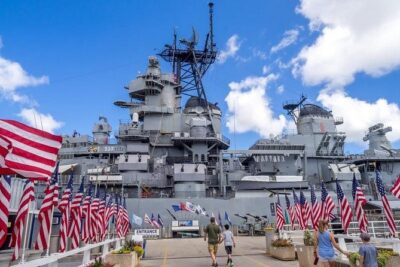
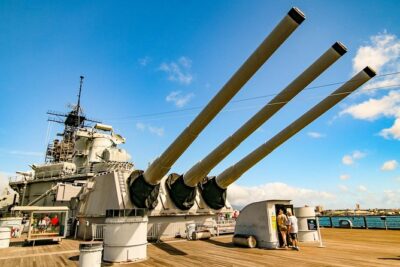
Then comes Battleship Missouri Memorial. You get about two hours here, and it’s a different kind of history lesson.
The ship is known as Mighty Mo, and it’s the location where Japan signed the official surrender documents after fighting in the last year of the war with Japan. That’s the headline. But the ship also helps you picture day-to-day life aboard a battleship—what it took to operate such a vessel, and what the environment likely felt like for the crew.
This stop is where you may feel the contrast: one side of the story is the attack and the memorial; the other is the closing moment, when the war’s outcome becomes formal.
If you like your history with physical scale—big hulls, tight decks, real ship layout—this is the right place to spend time.
Your own van and driver, more ways to fill the day
- Honolulu Airport, Cruise Port and Hotels Private Transfer
★ 5.0 · 452 reviews - Honolulu Airport: Waikiki Private Transfer With Lei Greeting
★ 5.0 · 339 reviews - Private Customizable Grand Circle Island Tour of Oahu
★ 5.0 · 243 reviews - Private Pearl Harbor and Honolulu City Tour
★ 5.0 · 214 reviews
Pearl Harbor Aviation Museum on Ford Island: hangars, aircraft, and targets
Next is the Pearl Harbor Aviation Museum, located on Ford Island. The program calls out that Ford Island was central to the U.S. Pacific Fleet operations on December 7, 1941, and that ships and aircraft were targets.
You’ll have about one hour here, and the admission includes all the main exhibit areas: Hangar 37, Hangar 79, and the Raytheon Pavilion.
Here’s why this part is valuable. It helps you see WWII through the air campaign lens, not just ships. Hangar 37 covers America’s involvement from the attack on Pearl Harbor through the wider WWII story. Hangar 79 continues into the rise of American air superiority, including later conflicts noted in the program (Korean, Vietnam, and Gulf Wars).
The aviation museum is also a good “breather” between memorial emotion and ship-scale immersion. It keeps the day from feeling one-note.
Oahu’s royal residence and Punchbowl Crater: history beyond the harbor
Your itinerary doesn’t stop at Pearl Harbor. It includes two additional Oahu stops that give the day extra depth.
First, there’s a stop tied to Oahu’s only royal residence in the United States. The program frames it as part of Hawaii’s story from the unification of the islands to the overthrow of the monarchy. Even without knowing the exact exhibit details in advance, this stop helps you remember that Pearl Harbor isn’t the only chapter you can learn from on Oahu.
Then you’ll head to Punchbowl Crater, described as an extinct volcanic tuff cone in Honolulu. It functions as a memorial honoring men and women who served in the U.S. Armed Forces and those who gave their lives.
This pairing works because it broadens the meaning of conflict and remembrance. It also helps you end the day with a quieter, reflective note rather than a final adrenaline-filled ship or museum.
Price and value: is $500 per person a smart buy?
At $500 per person, this isn’t a budget half-day bargain. But it’s also not just a car ride and a checklist.
What you’re getting included:
- Admission tickets to the USS Arizona Memorial boat ride
- Admission tickets to the three museums
- An in-person briefing at the Pearl Harbor Visitor Center
- A full 8–9 hour guided schedule with travel time
- A private format for your group
For value, the biggest win is the combination of time saved and friction avoided. Pearl Harbor visits can become a patchwork of tickets, timing windows, and transportation logistics. Bundling the boat ride and museum admissions into one guided plan is a big deal on a tight day.
Also, because it’s private, the guide can manage your flow instead of your group splitting up or waiting around. That’s where the day feels worth it.
The cost will still be a consideration if you’re traveling solo or if your group is small. If you have a friend or family member to share the cost, it becomes easier to justify.
Private pacing: why the guide makes the day feel short
One of the clearest strengths from past experiences is how well the guide keeps things moving without turning it into a blur. The result is a day that feels packed but not chaotic.
In one account, the guide Mark was praised for making the most of the limited time, with a strong plan that keeps everyone oriented. Another key note was that the guide shared enough about history and Hawaiian life that people stayed engaged, and the day went quickly even with the full agenda.
So when you book, look for your own fit: do you want a guide who turns memorials and museums into a connected storyline? If yes, this tour style is built for you.
Practicalities you’ll want to plan for
Pearl Harbor has rules that can surprise people. The tour notes no bags are allowed at Pearl Harbor. Plan to travel light, and consider a small personal item strategy based on what you can bring through the security process you’ll face there.
Also, because pickup is in designated zones in Waikiki, don’t assume your hotel door is the default. Make sure you check your text/email update between 12pm and 5pm local time the day before.
Mobility is another real-life factor. Not all vehicles can accommodate wheel chairs and scooters, and the program asks you to call right after booking to arrange what’s possible. If accessibility is a key concern for you, handle that early.
Finally, there’s the boat ride risk. The tour explains that the experience may become non-refundable if the National Park Service or Navy cancels boat ride programs due to mechanical issues, dangerous weather, or other safety concerns. You can still get value even if conditions shift, but it’s smart to plan around weather and bring patience.
Should you book Passport to Pearl Harbor Private?
Book it if:
- You want a guided, connected Pearl Harbor story rather than a self-paced checklist
- You value included admissions and the USS Arizona boat ride planning being handled for you
- You like the idea of seeing both ships and aviation in one day
- You want two extra Oahu stops that add context beyond WWII
Skip it or think twice if:
- You’re mainly looking for the cheapest way to visit and don’t mind self-arranging tickets and timing
- You’d rather spend more time lingering at fewer sites, because this itinerary is structured for coverage
- You need luggage and carry-on flexibility at Pearl Harbor, since no bags is part of the reality here
If you want a well-run day with a guide who keeps the story moving, this is one of the more sensible ways to tackle Pearl Harbor and make the rest of the Oahu add-ons feel connected.
FAQ
What time does the tour start?
The tour starts at 7:30am.
Is pickup available from every hotel in Honolulu?
No. Pickup is offered in designated zones in Waikiki, and you’ll receive pickup timing and location details by text or email the day before.
Is the boat ride to the USS Arizona Memorial included?
Yes. The tour includes the boat ride ticket to the USS Arizona Memorial.
Which museums are included?
Admission is included for three museums: USS Bowfin Submarine Museum & Park, Battleship Missouri Memorial, and Pearl Harbor Aviation Museum (including its hangars and exhibits).
How long is the tour?
The duration is listed as 8 to 9 hours (about 9 hours including travel time).
Can I bring bags to Pearl Harbor?
No. The tour notes that no bags are allowed at Pearl Harbor.
Is this a private tour?
Yes. It’s private, meaning only your group participates.
Do you offer free cancellation?
Yes. You can cancel for a full refund up to 24 hours before the experience starts.
Is the tour vehicle able to accommodate wheelchairs or scooters?
Not all vehicles can accommodate mobility devices like wheelchairs and scooters. The guidance is to call right after booking so arrangements can be discussed.
Also on the Honolulu List
- Oahu Grand Circle Island and Haleiwa Tour: 9-Hr Deluxe Experience★ 5.0 · 17,387 reviews
- Oahu: Grand Tour Around Island 16 Locations plus Snorkeling★ 5.0 · 8,669 reviews
- Salute to Pearl Harbor Including USS Arizona★ 4.5 · 7,433 reviews
- Majestic Circle Island Tour with Lunch★ 5.0 · 7,014 reviews
An Itinerary of Your Own
- Honolulu Airport, Cruise Port and Hotels Private Transfer★ 5.0 · 452 reviews
- Honolulu Airport: Waikiki Private Transfer With Lei Greeting★ 5.0 · 339 reviews
- Private Customizable Grand Circle Island Tour of Oahu★ 5.0 · 243 reviews
- Private Pearl Harbor and Honolulu City Tour★ 5.0 · 214 reviews
Pearl Harbor, Planned Three Ways
- Salute to Pearl Harbor Including USS Arizona★ 4.5 · 7,433 reviews
- Oahu: Pearl Harbor USS Arizona Memorial★ 4.5 · 5,209 reviews
- Pearl Harbor Remembered Tour★ 5.0 · 5,143 reviews
- Pearl Harbor, USS Arizona Memorial & Honolulu City Tour★ 5.0 · 4,866 reviews
The Latest from Kalakaua Avenue and Beyond


Pearl Harbor Visits from Honolulu, compared.
 ★ 4.5Pearl Harbor USS Arizona MemorialFrom $555,209 reviews
 ★ 5.0Pearl Harbor, USS Arizona Memorial & Honolulu City TourFrom $944,866 reviews
 ★ 5.0Pearl Harbor City TourFrom $694,254 reviews
 ★ 4.5Pearl Harbor USS Arizona Memorial & Battleship MissouriFrom $1492,276 reviews
 ★ 4.5Pearl Harbor, National Memorial Cemetery and Honolulu City TourFrom $591,777 reviews
 ★ 4.5Pearl Harbor: USS Arizona Memorial & USS Missouri Battleship Tour from WaikikiFrom $1571,445 reviews
 ★ 5.0Pearl Harbor, Dole Plantation, and Polynesian Center from WaikikiFrom $199787 reviews
 ★ 3.5Pearl Harbor Arizona Memorial – Honolulu Tour – Submarine AccessFrom $74767 reviews
Browse the lists this tour appears in