
REVIEW · DOLPHIN & HUMPBACK CRUISES
Oahu: Whale Watching Cruise Whales Guaranteed
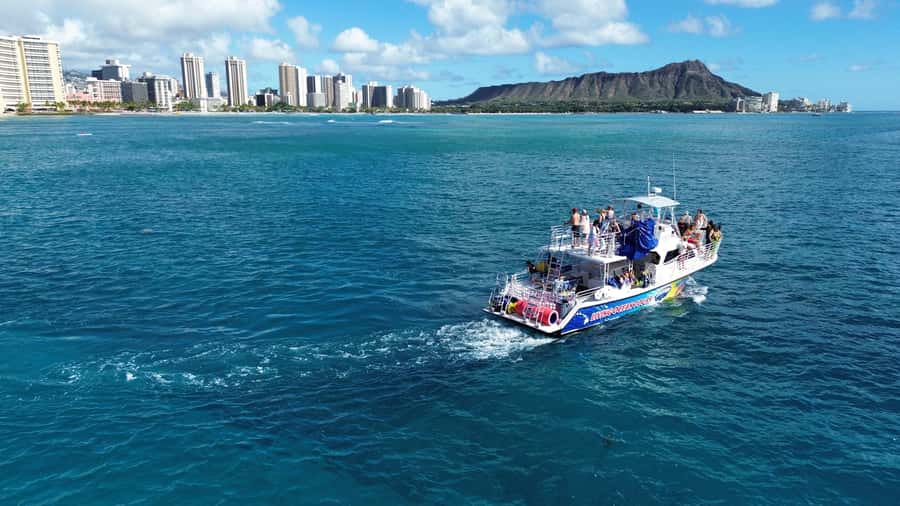
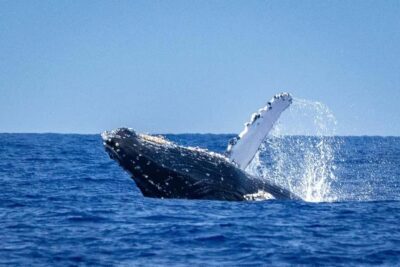
Watching whales from Waikiki is a short, high-impact outing. This Oahu cruise pairs prime afternoon and sunset viewing with big-water scenery—Waikiki Beach and Diamond Head—while your guide points out what humpbacks do during their seasonal migration. If you get lucky, you’ll see the real stuff: breaches, tail slaps, and the calm moments whales surface near the boat.
Two things I really like: the ride gives you double-decker viewing so you’re not stuck staring at people’s heads, and the crew works hard to find whales fast. I also like the practical, friendly vibe from the captains and staff I saw credited in recent experiences, including Capt Kevin with Tanner and Missy, and Capt Jason with a crew that really stayed focused. One consideration: whale sightings are common, but not guaranteed—on the rare no-sighting day you get a free return trip, not a refund replacement for the same cruise.
Here’s the key decision for you: if you’re going during the January to April humpback season and you can handle a boat ride (and possible choppy water), this is one of the better ways to spend 90 minutes on Oahu without turning it into a full-day production.
In This Review
- Key points before you go
- Waikiki Beach and Diamond Head: why this route feels so worth it
- The 90-minute timing game: where sunset fits best
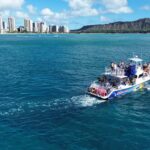
- The boat setup: double-decker viewing and what that changes
- Humpback whales in Hawaii: how to spot what matters
- What your guide does on deck (and why it helps)
- Snacks, drinks, and the sunset photo moment
- When you’ll see whales: seasonality and the return-trip safety net
- Price and value: is $56 a good deal?
- Who this cruise is best for (and who should skip it)
- Getting there smoothly: Pier B at Kewalo Basin
- Onboard rules: simple, but they matter
- Should you book this whale watching cruise on Oahu?
- FAQ
- How long is the whale watching cruise?
- How much does it cost?
- Where do I meet for the cruise?
- When do humpback whales migrate to Hawaii for mating and birth?
- Are whale sightings guaranteed?
- What will I see during the cruise?
- What’s included in the ticket price?
- Is hotel pickup included?
- What should I bring?
- What’s the cancellation policy?
Key points before you go
- Waikiki + Diamond Head views from the water in two 45-minute whale-watching stretches
- Double-decker power boat gives more sightlines than single-level rides
- Humpbacks on the move from January to April, with guidance on marine behavior
- Crew energy stands out, including named captains like Capt Kevin and Capt Jason
- If you strike out, you’re offered a free return trip rather than just a shrug
- Bring the basics for sun and photo time: hat, sunscreen, sunglasses, camera
Waikiki Beach and Diamond Head: why this route feels so worth it
This cruise is built around two iconic backdrops you’ll want anyway on Oahu. You start at Living Ocean Tours and then spend two stretches out on the water focused on whales, with the scenery doing its job in the background.
The first big viewing zone is the Waikiki Beach area for about 45 minutes. Being on the water changes everything. From shore, Waikiki can feel like a postcard with traffic and buildings in the frame. From the deck, you get that open horizon and the coastline sitting where your eyes naturally track. It also means you’re not hunting for the perfect whale position first—you’re already looking across prime water while the captain sets up for sightings.
The second stop is around Diamond Head Lighthouse for another 45 minutes. Diamond Head is a clean visual marker, and from the sea the angles are great for photos—especially if you catch the sun moving toward sunset. It’s a solid setup for a cruise because the route stays visually interesting even when you’re waiting for a blow or a breach.
The 90-minute timing game: where sunset fits best
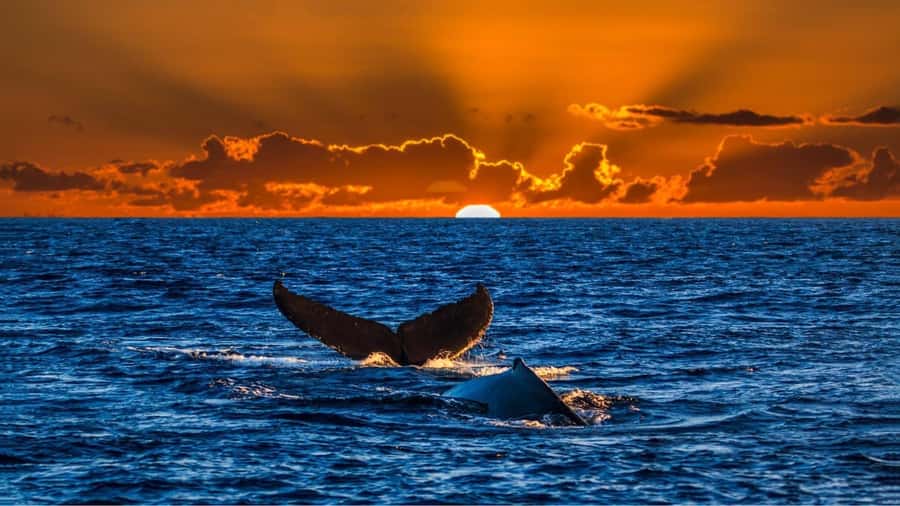
The whole outing runs about 90 minutes, and the operation is set up to run daily during the season when humpbacks are most likely to be around. Afternoon and especially sunset is when the boat feels most romantic and also when your chances tend to be better. That matters because whale watching is half nature, half timing. If you go earlier in the day, you might still see whales, but the light won’t flatter the moment like it does at dusk.
Also, this isn’t a long slog. It’s not a half-day excursion that turns into a whole evening of standing and squinting. You’re out long enough to get multiple chances—then you’re back with enough energy left to enjoy Waikiki afterward. That makes it a smart add-on if you’re already doing beach time, dinner, and a show.
One practical note from the experience vibe: people praised how the boat experience felt active and not overly crowded, with some pointing out it can feel like a smaller-boat option. You’ll still want to show up early and be ready to move for sightlines, but it helps that you’re not packed into a floating gym.
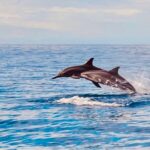
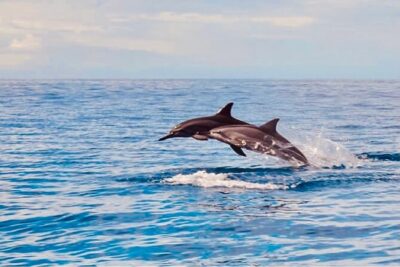
Spinners and humpbacks, other lookouts afloat
The boat setup: double-decker viewing and what that changes
This trip uses a double-decker power boat, and that detail is more than a marketing line. On whale cruises, your best view usually comes from being able to adjust your angle quickly when a blow pops up. A second level means you can reposition without fighting for the same spot at rail level.
You’ll also have live guide commentary, and that’s a big deal because it helps you know what you’re seeing instead of just staring at the water and guessing. The format on the boat is built for watching: your crew shares whale and marine ecology context as the captain searches.
There’s a bar onboard with snacks and drinks available for purchase, and you’ll also have light snacks plus sodas, juices, and water included. So you get the basics covered, but you’re not stuck with only what’s provided.
Humpback whales in Hawaii: how to spot what matters
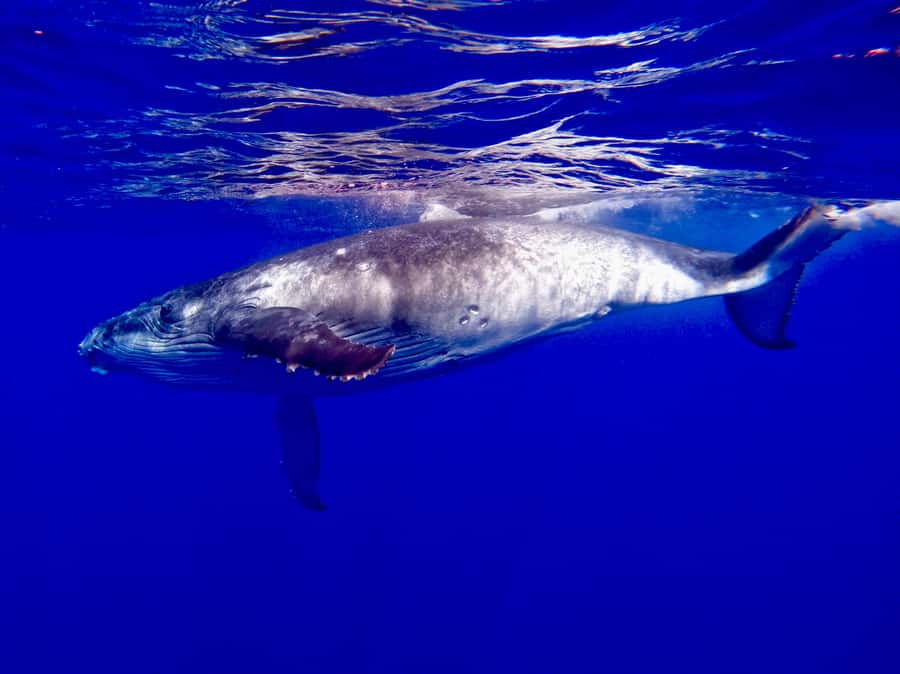
During the January to April season, humpback whales migrate to Hawaii to mate and give birth. That’s the big reason this cruise is scheduled the way it is, and it’s why the whale sightings are described as very common in operation.
What you’re likely to see depends on the day and the whales’ behavior, but your guides will point out common signs like:
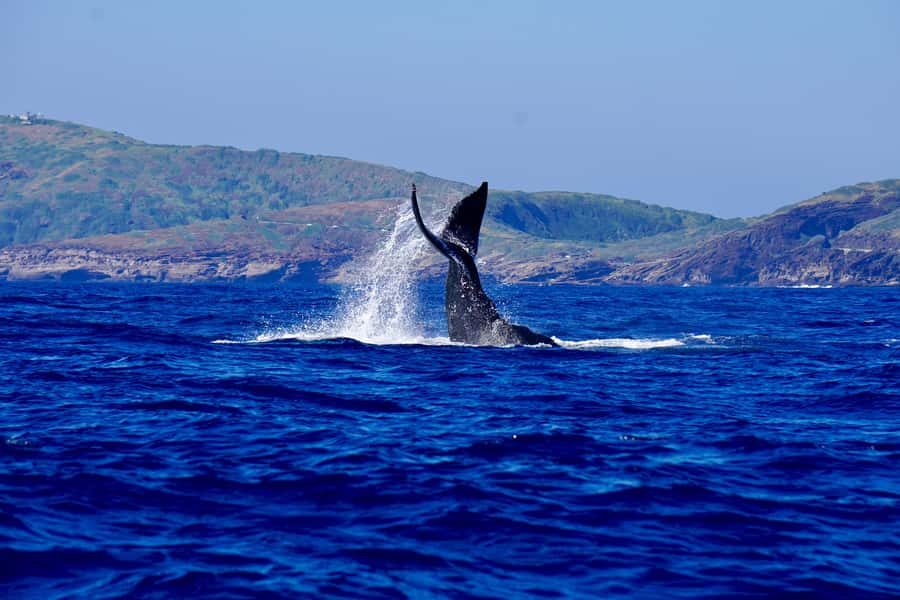
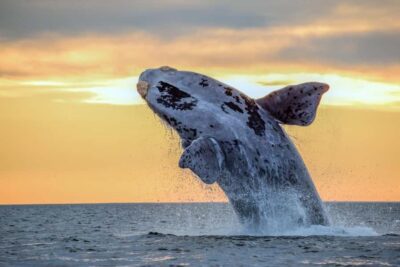
- Breaches (when whales leap out of the water)
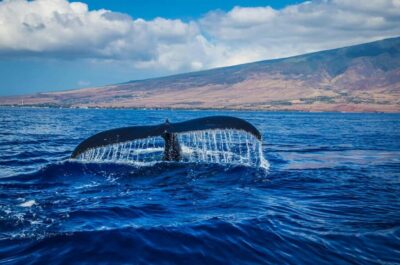
- Tail slaps (strong signals you can often hear or see)
- Playful interactions, where whales surface repeatedly or move near each other
One of the strongest themes in recent experiences is seeing whales sooner rather than later. Some people reported whales right away, and others were thrilled by a mom and calf sighting. A mom-and-calf moment can be especially memorable because it often includes repeated surfacing and a slower, more watchable rhythm than a quick pass by.
If you’re hoping for close encounters, you should know this is nature. Still, in the experiences I reviewed, captains were credited for taking the boat as close as possible when whales appeared. That’s one of the reasons this type of cruise can feel more satisfying than a far-off pass where you spend most of the time saying, I think I saw something.
What your guide does on deck (and why it helps)
The guide commentary isn’t just facts for the sake of facts. It’s your cheat sheet for spotting behavior patterns on the water.
Expect the guide to share insights on whale behavior and marine ecology as you watch for activity. That means you’ll get context for why a whale surfaces, why it might linger, and how the actions you’re seeing fit into the broader life cycle of humpbacks in Hawaii.
Crew energy also shows up in how the experience is described. Named captains and staff come up often, including Capt Kevin and crew members Tanner and Missy, Capt Shawn, and Capt Jason. People also mention support from staff like Haley and Taylor. What I take from that: the team stays engaged, works the search actively, and helps people feel like they’re part of the watching—not just passengers in silence.
And yes, photos matter. More than one experience notes that the crew helped with taking pictures during sunset. When the light turns golden and whales start surfacing, having someone help you get the shot can turn a nice sight into a keep-it-forever memory.
More departures out of Kewalo Basin and the Ala Wai
- Arrival Transfer: Airport Shuttle Honolulu and Waikiki or Cruise Terminal
★ 4.0 · 1,242 reviews - Shared Round-Trip Transfer: Honolulu Airport to Hotel or Cruise Terminal
★ 4.0 · 711 reviews - Waikiki Beach: Turtle Snorkeling and Sailing on Hāwea
★ 4.7 · 656 reviews - Shared Arrival Transfer: Honolulu Airport to Hotel or Cruise Terminal
★ 3.5 · 609 reviews
Snacks, drinks, and the sunset photo moment
This is a sunset-friendly cruise by design. Even if you’re not a “boat person,” the combination of moving scenery and low light tends to make the experience feel special.
The onboard setup means you won’t go hungry. Light snacks and drinks like sodas, juices, and water are included. If you want more, the bar offers additional snacks and drinks available for purchase. That’s useful because it helps you stay comfortable during the whole 90 minutes without stress.
Photo-wise, plan for quick action. If whales breach or a blow happens at the right angle, the moment can be brief. That’s why camera-ready behavior helps—sunscreen and hat are for you, but being ready to shoot at the first signs of action is what helps you catch more than blur.
When you’ll see whales: seasonality and the return-trip safety net
Whale sightings are common on this route, but nature doesn’t run on your calendar. The tour plan acknowledges this honestly: in the rare event of no sightings, you’re offered a free return trip.
That safety net is important when you’re deciding whether to spend money on a whale cruise. It doesn’t change the fact that whales are wild animals, but it reduces the worst-case outcome from lost money to a chance to try again.
To stack the odds in your favor:
- Go during the humpback season January to April
- Choose the afternoon or sunset departure if you have a choice
- Be ready to spend real time watching, not half watching and half scrolling
If you do get skunked, the return trip policy is the consolation. If you want the best odds plus the best light, sunset is the best bet.
Price and value: is $56 a good deal?
At $56 per person for a 90-minute cruise, the value is pretty straightforward: you’re paying for time on the water with a guide, plus access to a double-decker viewing setup and included snacks and non-alcoholic drinks.
Whether it’s a deal depends on what you’d otherwise do. If your alternative is sitting in Waikiki traffic or burning time with less memorable sightseeing, this is a focused experience. It’s also a good value for couples and small groups because the scenery and timing (sunset) make it feel like more than a wildlife outing.
The other value lever is the free return trip if there are no sightings. That reduces risk, and it’s a meaningful part of the price equation because it protects you from the most frustrating outcome.
Who this cruise is best for (and who should skip it)
This one’s pretty clear on fit. It’s not suitable for:
- Children under 3
- Pregnant women
- People with back problems
- People prone to seasickness
That’s not nitpicking. Boat comfort can make or break your ability to enjoy whale watching. If seasickness is a concern, think hard before booking, because you’ll be out on open water for the full stretch.
On the upside, it suits a lot of Oahu travelers:
- Couples who want sunset views and a nature story
- People who want a short excursion that still feels like a highlight
- Anyone who likes guided explanation instead of just staring at the ocean
If you’re a first-timer to whale watching, this format is friendly because the guide helps you interpret what you’re seeing. If you’re returning to the island and already did basic sightseeing, this gives you a totally different side of Oahu—water-level wildlife, not just viewpoints.
Getting there smoothly: Pier B at Kewalo Basin
Meet up at Pier B in Kewalo Basin Boat Harbor. There’s no hotel pickup included, so you’ll need your own way to get there.
Arrive with enough time to park, check in, and get your spot before the cruise starts. On whale cruises, your best moment to get your bearings is before departure—once you’re out, you’re watching and responding to what’s happening.
Also plan for sun and glare. The basics are worth bringing: sunglasses, a hat, sunscreen, and a camera. If you’re photographing, remember that spray and changing light can be annoying—protect your gear the way you would at the beach.
Onboard rules: simple, but they matter
The rules are standard and worth noting. Smoking isn’t allowed, and alcohol and drugs aren’t allowed. That keeps the experience focused on viewing and safety.
If you’re the type who likes to bring your own snacks, don’t count on that being part of the plan. Light snacks, sodas, juices, and water are included, so you should be set for the cruise length.
Should you book this whale watching cruise on Oahu?
I’d book it if you’re traveling during January to April, you want a short outing with big payoff, and you’re excited to pair wildlife with sunset scenery. The double-decker layout and the guide commentary make it feel like you’ll actually understand what you’re seeing, not just hope for a random sighting.
I wouldn’t book it if you’re in any of the groups listed as not suitable, especially if seasickness is likely. And if you’re going at a time when you’re outside the main humpback season, expect your odds to be less favorable—this cruise is clearly designed around that migration window.
If you want a practical “yes” decision: choose the afternoon or sunset cruise, bring sun protection, and show up ready to watch for action. Then, if the ocean doesn’t cooperate, the free return trip is there to soften the blow.
FAQ
How long is the whale watching cruise?
The cruise runs about 90 minutes.
How much does it cost?
The price is $56 per person.
Where do I meet for the cruise?
Meet at Pier B in Kewalo Basin Boat Harbor.
When do humpback whales migrate to Hawaii for mating and birth?
The migration season referenced for this experience is January to April.
Are whale sightings guaranteed?
Sightings are very common but not guaranteed. If there are no sightings, you’re offered a free return trip.
What will I see during the cruise?
You’ll watch for humpback whales and may also notice marine activity such as breaches, tail slaps, and other whale behavior. The route is set for viewing near Waikiki Beach and Diamond Head.
What’s included in the ticket price?
Included are the whale watching cruise, live guide commentary, access to the double-decker power boat, and light snacks plus sodas, juices, and water.
Is hotel pickup included?
No, hotel pickup and drop-off are not included.
What should I bring?
Bring sunglasses, a hat, a camera, and sunscreen.
What’s the cancellation policy?
You can cancel up to 24 hours in advance for a full refund.
Leaving from Kewalo Basin
- Arrival Transfer: Airport Shuttle Honolulu and Waikiki or Cruise Terminal★ 4.0 · 1,242 reviews
- Shared Round-Trip Transfer: Honolulu Airport to Hotel or Cruise Terminal★ 4.0 · 711 reviews
- Waikiki Beach: Turtle Snorkeling and Sailing on Hāwea★ 4.7 · 656 reviews
- Shared Arrival Transfer: Honolulu Airport to Hotel or Cruise Terminal★ 3.5 · 609 reviews
Also on the Honolulu List
- Oahu Grand Circle Island and Haleiwa Tour: 9-Hr Deluxe Experience★ 5.0 · 17,387 reviews
- Oahu: Grand Tour Around Island 16 Locations plus Snorkeling★ 5.0 · 8,669 reviews
- Salute to Pearl Harbor Including USS Arizona★ 4.5 · 7,433 reviews
- Majestic Circle Island Tour with Lunch★ 5.0 · 7,014 reviews
Spinners, Humpbacks and Open Water
- Oahu Dolphin and Snorkel Tour with Waikiki Pickup & Lunch★ 4.5 · 1,687 reviews
- Best Waikiki Whale Watching in Honolulu: Whales Guaranteed★ 4.5 · 196 reviews
- Dolphin Watching and Snorkeling on the West Coast of Oahu★ 4.5 · 62 reviews
- Waikiki: Sunset Whale Watching with 2 Drinks (BYOB-Friendly)★ 4.3 · 34 reviews
The Latest from Kalakaua Avenue and Beyond


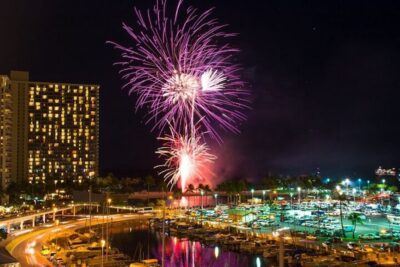
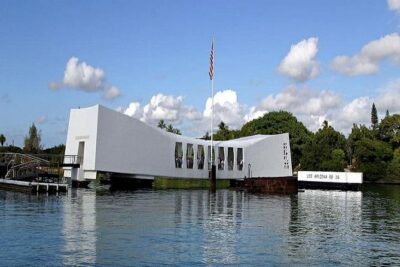
Dolphin & Humpback Cruises, compared.
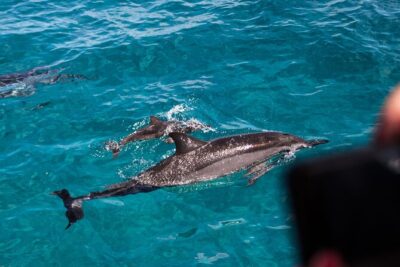 ★ 4.5Oahu Dolphin and Snorkel Tour with Waikiki Pickup & LunchFrom $1641,687 reviews
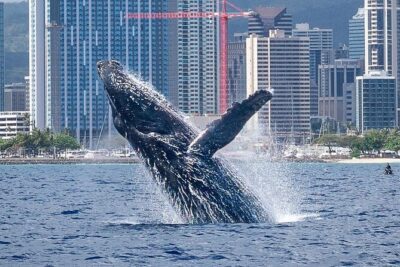 ★ 4.5Best Waikiki Whale Watching in Honolulu: Whales GuaranteedFrom $79196 reviews
 ★ 4.5Dolphin Watching and Snorkeling on the West Coast of OahuFrom $15662 reviews
 ★ 4.3Waikiki: Sunset Whale Watching with 2 Drinks (BYOB-Friendly)From $5234 reviews
 ★ 4.3Waikiki Whale Watching CruiseFrom $5727 reviews
 ★ 4.8Snorkeling & Dolphin Watch Cruise w/ Luau Style BuffetFrom $17110 reviews
 ★ 3.9Whale Watching Cruise in Waikiki Oahu – SEE THE HUMPBACKS!From $806 reviews
Browse the lists this tour appears in